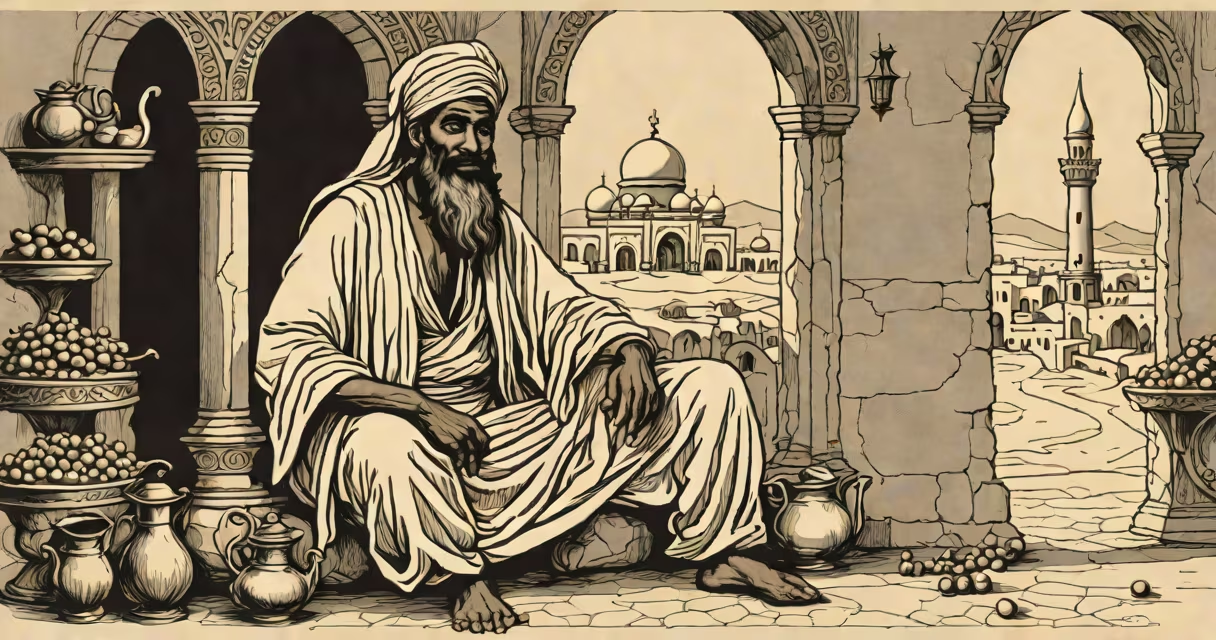
Ali Baba country refers to the fictional Middle Eastern setting of "Ali Baba and the Forty Thieves," a famous story from One Thousand and One Nights. This collection originated in the Islamic Golden Age, with core stories likely composed in 9th-century Baghdad.
The tale follows Ali Baba, a poor woodcutter who discovers a secret cave filled with treasure guarded by forty thieves. His clever slave girl Morgiana helps him outwit the thieves using intelligence and bravery.
The story takes place in a generic Middle Eastern setting, never specifying an exact modern-day country. Scholars believe it reflects the cultural and geographical field of the medieval Islamic world, particularly Iraq, Syria, and Persia (modern Iran).
A key clue lies in the architectural details: the story mentions "sesame," a crop historically significant in Mesopotamia. The thieves' hideout is a cave behind a rock door, a motif appearing in Persian folklore.
Many assume Ali Baba country is specifically Saudi Arabia due to its desert imagery. However, the story predates the modern nation-state system. The Arabian Peninsula's cultural and trade networks extended far beyond current borders.
Another mistake is equating it with modern Dubai or Abu Dhabi. While these cities embody Middle Eastern wealth today, the tale's setting reflects a pre-Islamic or early Islamic era, with caravans and hidden treasures symbolizing trade routes.
The story highlights themes of class struggle and cleverness overcoming brute force. Ali Baba's rise from poverty resonated across cultures, leading to adaptations worldwide. French author Antoine Galland popularized it in Europe through his 18th-century translation of One Thousand and One Nights.
In modern times, the phrase "open sesame" from the story became a widely recognized expression for accessing hidden knowledge or resources. The tale appears in children's books, films, and even video games, demonstrating its enduring appeal.
Historical records show similar tales existed in Persian literature before the 10th century. The motif of a hidden treasure cave appears in Iranian folklore, suggesting a shared cultural heritage. Archaeological findings in the region reveal elaborate tunnel systems used for hiding valuables during ancient conflicts.
One notable example is the ancient city of Petra in Jordan, known for its rock-cut architecture. While not directly linked to the Ali Baba story, such sites illustrate how realistic the tale's setting appears when compared to actual historical locations.
When researching this topic, I discovered that many modern retellings set the story in Morocco due to its exotic appeal in Western media. However, the original context was likely more centered around the Iraqi-Persian cultural sphere, where the One Thousand and One Nights collection was compiled.
Ali Baba country represents a fictional yet culturally rich setting drawn from the medieval Middle East. While its exact location remains unspecified, the story's elements reflect real historical and geographical features of the region. Understanding its origins provides valuable insight into the cultural exchange that shaped world literature.