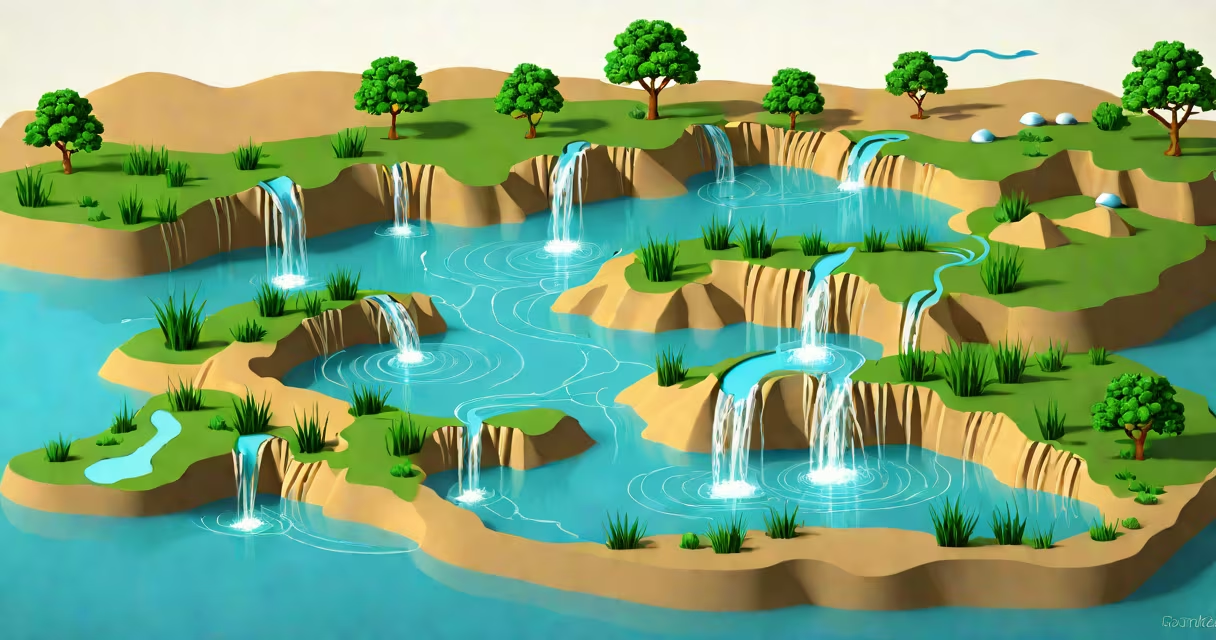
An aquifer water cycle describes how water moves through underground rock layers, replenishing groundwater supplies. This process involves surface water seeping through porous rock, storing in aquifers, and eventually resurfacing.
Aquifers are underground formations of permeable rock, sand, or gravel that hold water. These layers act like natural sponges, absorbing and storing rainwater and runoff. The water table marks the top of this saturated zone, where water fills all available spaces in the rock.
For example, the Edwards Aquifer in Texas stores enough water to fill 600,000 Olympic-sized swimming pools. It supplies drinking water to millions and supports agricultural irrigation.
| Type | Description | Example |
|---|---|---|
| Confined Aquifer | Sandwiched between impermeable layers that prevent contamination | Floridan Aquifer (USA) |
| Unconfined Aquifer | Open to surface water recharge | High Plains Aquifer (USA) |
| Perched Aquifer | Floating above the main water table due to local conditions | Found in volcanic regions |
Groundwater recharge occurs when surface water infiltrates the ground and moves downward until it reaches the water table. This happens through sinkholes, riverbeds, and soil pores. Once in the aquifer, water slowly flows toward discharge zones, where it resurfaces through springs or wells.
In Saudi Arabia, ancient aquifers beneath sand dunes hold water dating back thousands of years. However, excessive pumping has caused these non-renewable resources to deplete rapidly.
Many people confuse aquifers with underground rivers or lakes. Unlike rivers, groundwater doesn't flow in channels but moves slowly through tiny spaces in rock. The speed varies from inches per year to feet per day, depending on the aquifer's permeability.
Another misconception is that aquifers are infinite. Most recharge slowly, taking decades or centuries to refill. Over-pumping can lead to permanent depletion, as seen in California's Central Valley, where groundwater levels have dropped over 400 feet in some areas.
Understanding the aquifer water cycle is important for sustainable water management. By protecting recharge areas and monitoring usage, communities can preserve these important water sources for future generations.