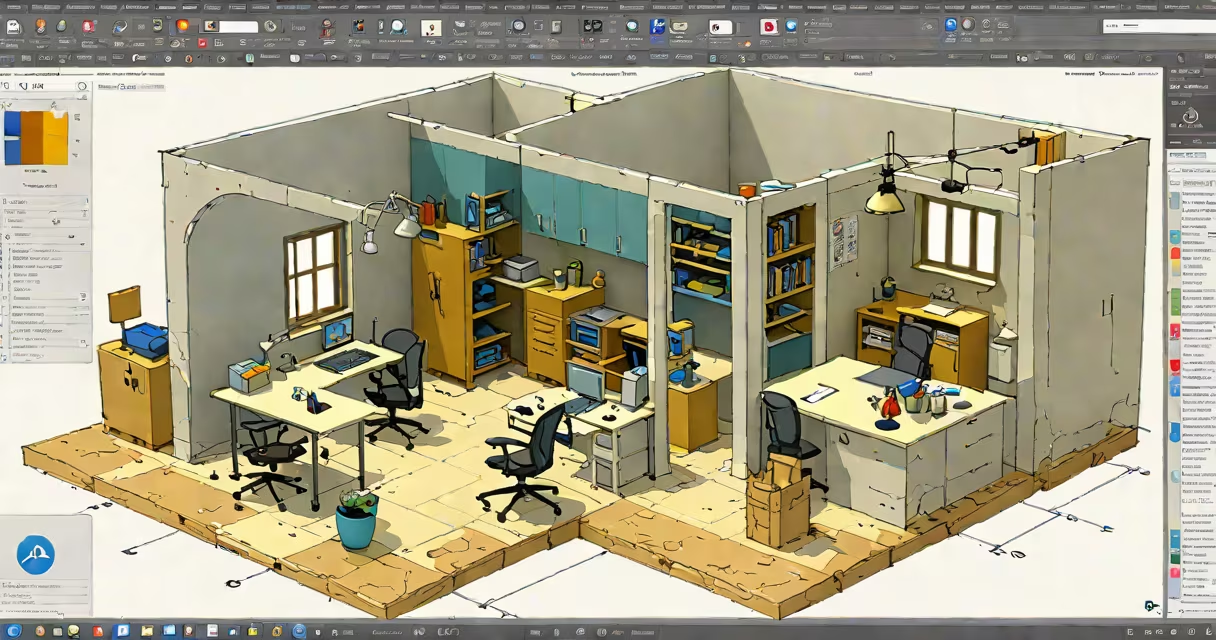
An Autodesk Fusion 360 course teaches CAD, CAM, and CAE skills for product design and manufacturing. These courses cover cloud-based 3D modeling, simulation, and machining workflows.
Most courses follow a structured curriculum with hands-on projects. Students learn through video tutorials, live instruction, or self-paced modules. Courses typically include:
Many courses conclude with a capstone project where students design and manufacture a real product.
| Course Type | Duration | Focus Area | Typical Audience |
|---|---|---|---|
| Beginner | 1-3 weeks | Basic navigation and simple models | New users, hobbyists |
| Intermediate | 4-8 weeks | Advanced modeling, assemblies, basic simulations | Professionals upgrading skills |
| Advanced | 8-12 weeks | Complex simulations, CAM programming, collaborative workflows | Engineers, designers preparing for certification |
| Specialized | 2-4 weeks | Industry-specific applications (aerospace, automotive, etc.) | Domain experts needing targeted skills |
Students come from diverse backgrounds including:
Some believe Fusion 360 courses only teach basic modeling. In reality, advanced courses cover:
Another myth is that Fusion 360 lacks precision. The software supports micron-level tolerances for professional manufacturing.
A typical 8-week intermediate course might look like:
This structure balances theory with practical application, ensuring students gain both conceptual understanding and technical proficiency.