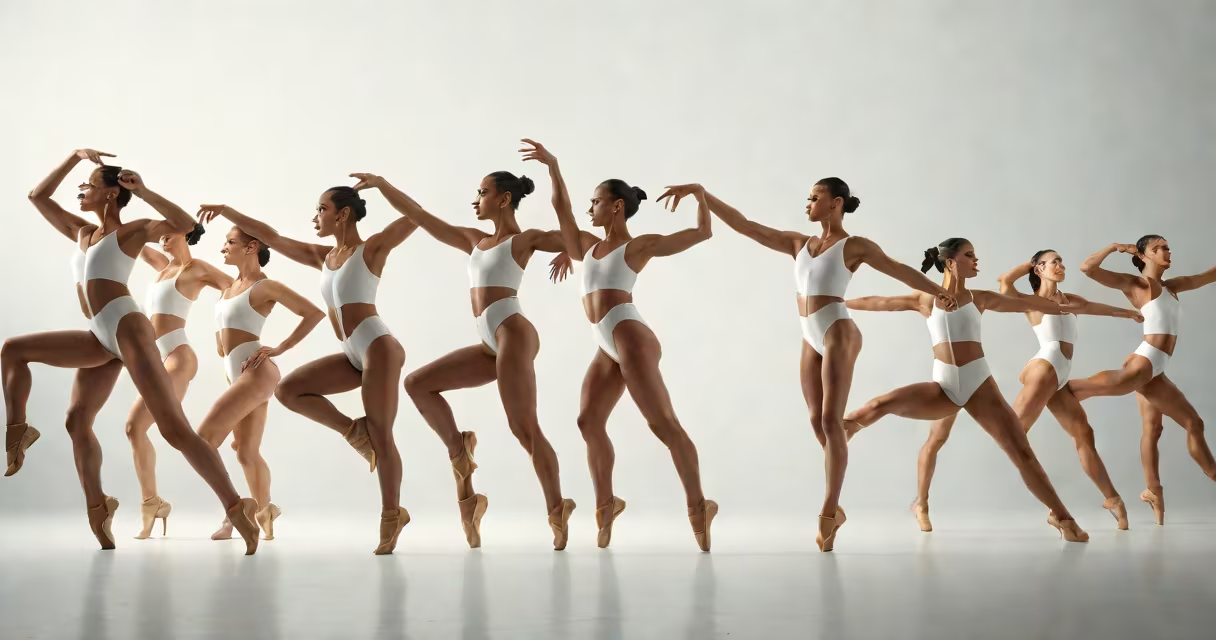
An avant-garde dance group is a collective of performers and choreographers who push artistic boundaries through unconventional movement, new concepts, and experimental techniques. These groups often challenge traditional norms of dance by incorporating multidisciplinary elements like visual art, technology, or social commentary.
Avant-garde dance groups operate outside conventional frameworks. They prioritize originality over technical perfection, often blending multiple styles or inventing new ones. For example, the Merce Cunningham Dance Company used chance procedures to determine choreography, breaking away from narrative structures.
| Type | Characteristics | Example |
|---|---|---|
| Conceptual Dance | Focuses on ideas over movement | Yvonne Rainer's "Trio A" |
| Postmodern Dance | Rejects classical technique | Trisha Brown's "Walking on the Wall" |
| Interdisciplinary Collectives | Blends dance with other arts | Dorset Dance Collective's multimedia performances |
These groups perform in alternative spaces like galleries, warehouses, or public installations rather than traditional theaters. Their work often critiques societal norms or explores abstract themes. For instance, Pina Bausch's Tanztheater combined dance with psychological storytelling to evoke raw emotions.
Many assume avant-garde dance is chaotic or lacks skill. However, it requires rigorous training and discipline to execute unconventional movements safely. A misstep could lead to injury, so precision is important despite its abstract nature.
I once attended a performance by we are group, where dancers used their bodies as canvases for projected light. The interplay between movement and technology created a mesmerizing spectacle that defied traditional categorization.
Avant-garde dance differs from contemporary dance in its rejection of formal structures. While contemporary dance may incorporate lyrical or fluid movements, avant-garde groups often favor abrupt, angular, or repetitive motions to provoke thought.
For example, Merce Cunningham's "RainForest" featured randomness in both choreography and John Cage's accompanying music, creating a disorienting yet captivating experience. This contrasts with George Balanchine's neoclassical ballets, which maintain structural cohesion.
Avant-garde dance groups change artistic expression through innovation and experimentation. Their work challenges audiences to perceive movement in new ways, making them important contributors to the evolution of dance.