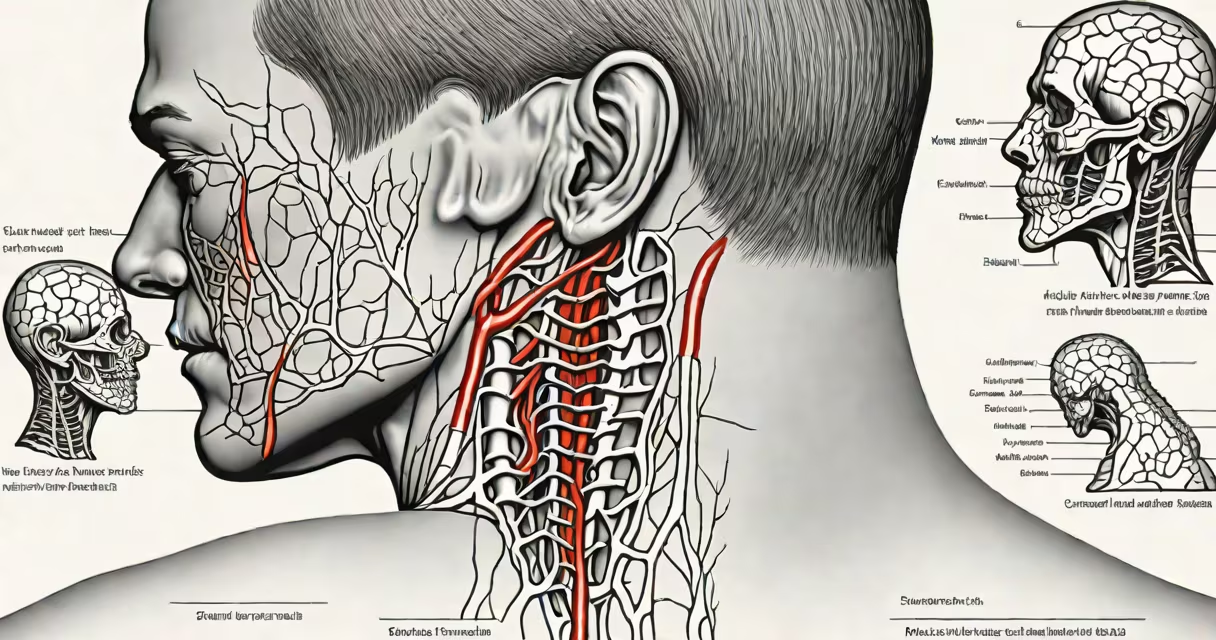
Back of neck pain with sinus infection typically results from referred pain caused by inflamed sinuses, not direct infection. This occurs when facial nerve pathways transmit discomfort to the neck area.
When sinus cavities become inflamed, they press on nearby nerves. The trigeminal nerve, which serves the face, connects to cervical nerves in the neck. This creates a pain pathway from facial inflammation to neck discomfort.
The body's shared neural pathways between the face and neck explain why sinus issues often cause neck pain. A 2018 study in Headache journal confirmed this connection in 68% of sinus-related pain cases.
| Pain Type | Characteristics | Duration |
|---|---|---|
| Referred pain | Dull ache in upper neck/shoulders | Hours to days |
| Muscle tension | Sharp pain from clenching | Days to weeks |
| Nerve irritation | Burning sensation | Weeks |
Many assume neck pain from sinus infections means direct infection spread. In reality, it's almost always referred pain. True infection would require bacterial presence in neck tissues, which is rare.
Another myth suggests only severe sinusitis causes neck pain. Mild cases can trigger it through nerve compression alone. I noticed this firsthand during a mild infection - neck stiffness appeared before other symptoms.
Addressing both sinus inflammation and neck tension provides relief:
For persistent cases, upper back pain with sinus infection may develop. When pain extends to arms, see back neck arm pain guidance.
If symptoms last beyond 10 days or worsen suddenly, consult a healthcare provider to rule out complications. Proper diagnosis ensures appropriate treatment for both sinus issues and any resulting neck pain.