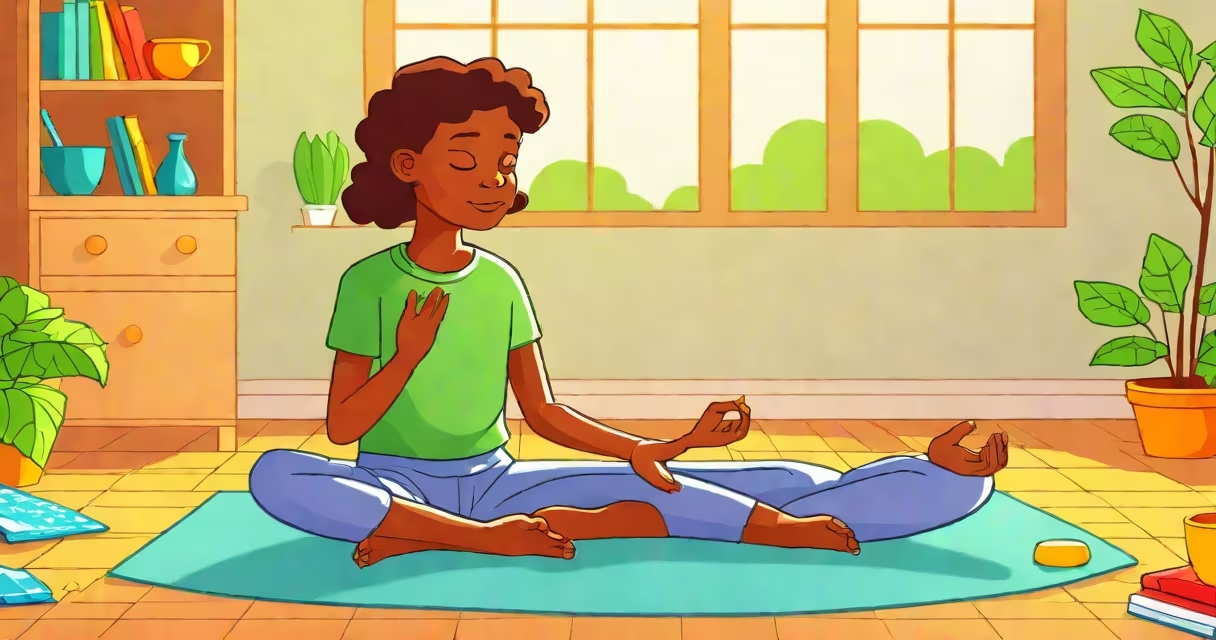
Calm breathing for kids teaches children simple, structured breathing exercises to regulate emotions and reduce stress. These techniques use slow, intentional breaths to create a sense of calm.
When children feel overwhelmed, their breathing often becomes rapid and shallow. Calm breathing exercises counteract this by slowing the breath and increasing oxygen flow. This activates the parasympathetic nervous system, which triggers the body's relaxation response.
Breathing exercises work by shifting focus from distressing thoughts to the physical act of breathing. This distraction helps children regain control over their emotions. The slower, deeper breaths also lower heart rate and blood pressure, further promoting relaxation.
For example, a child who feels anxious before a test might practice "balloon breathing," where they inhale deeply through the nose and exhale slowly through the mouth, imagining their belly expanding like a balloon. This technique helps them stay centered and focused.
There are several kid-friendly breathing exercises, each with unique benefits:
| Exercise | Description | Best For |
|---|---|---|
| Balloon Breathing | Inhale deeply through the nose, hold briefly, then exhale slowly through the mouth while imagining the belly expanding like a balloon. | General anxiety, pre-test nerves |
| Bunny Breathing | Take quick, short breaths through the nose (like a bunny sniffing), then exhale slowly through the mouth. | Overstimulation, hyperactivity |
| Candle Breathing | Inhale deeply through the nose, then exhale slowly through the mouth as if blowing out a candle. | Frustration, anger |
Parents and educators use calm breathing for kids in moments of high stress, such as before bedtime, during school transitions, or after a tantrum. These techniques help children develop emotional regulation skills early on, setting the foundation for long-term mental health.
A study published in Frontiers in Psychology found that children who practiced regular breathing exercises showed improved focus and reduced anxiety levels. These benefits extend beyond immediate calming effects, helping kids build resilience over time.
Some parents assume that breathing exercises are only useful for extreme stress. However, they're also effective for everyday situations, such as helping a child fall asleep or preparing for a new activity. Others think kids won't engage with breathing exercises, but when presented in a fun, playful way, most children enjoy them.
I've seen this firsthand while teaching calm breathing for kids at a local elementary school. By framing the exercises as games-like "blowing out birthday candles"-children were more willing to participate and even asked to do them regularly.
To introduce calm breathing for kids, start with simple exercises like balloon breathing. Practice together as a family to model the technique. Over time, encourage children to use these methods independently when they feel upset or overwhelmed.