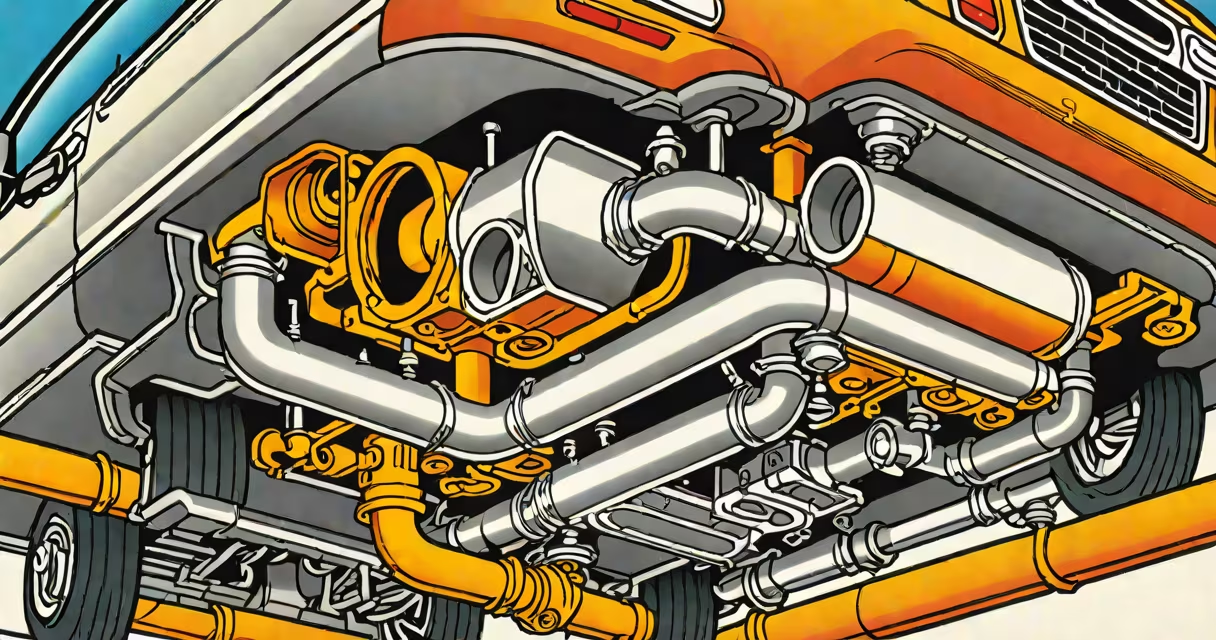
A catalytic converter is an exhaust system component that converts harmful pollutants from internal combustion engines into less toxic substances. It is important for reducing vehicle emissions.
Most gasoline-powered cars built since the 1970s have catalytic converters. They work by using a catalyst, typically platinum, palladium, or rhodium, to trigger chemical reactions that convert carbon monoxide, hydrocarbons, and nitrogen oxides into carbon dioxide, water vapor, and nitrogen.
The process begins when exhaust gases enter the converter through its inlet pipe. The gases pass through a honeycomb-like structure coated with the catalyst. This structure increases the surface area, allowing more gas to come into contact with the catalyst.
As the gases pass through, the catalyst triggers chemical reactions. Carbon monoxide (CO) reacts with oxygen (O₂) to form carbon dioxide (CO₂). Hydrocarbons (HC) react with oxygen to form water vapor (H₂O) and carbon dioxide. Nitrogen oxides (NOₓ) are broken down into nitrogen (N₂) and oxygen (O₂).
A catalytic converter consists of several key parts:
Catalytic converters are installed in the exhaust systems of most gasoline-powered vehicles. They are required by law in many countries to comply with emission standards set by agencies like the Environmental Protection Agency (EPA) in the U.S. and the European Emission Standards (Euro Norms) in Europe.
These devices reduce the amount of harmful pollutants released into the atmosphere. Without them, vehicles would emit high levels of carbon monoxide, hydrocarbons, and nitrogen oxides, contributing to air pollution and smog.
One common misconception is that catalytic converters only work on gasoline-powered vehicles. However, they can also be used in diesel engines, though the design and catalyst materials differ slightly. Another myth is that catalytic converters reduce fuel efficiency. In reality, they have a negligible impact on fuel economy.
Catalytic converters do not eliminate all emissions. They reduce harmful pollutants to levels deemed safe by environmental regulations. For more details on where to find a catalytic converter in a vehicle, see this guide.
Understanding how catalytic converters work is important for maintaining vehicle performance and reducing environmental impact. For insights into what makes a catalytic converter go bad, check this resource., exploring catalytic capital can provide a broader perspective on sustainable investments in green technologies.