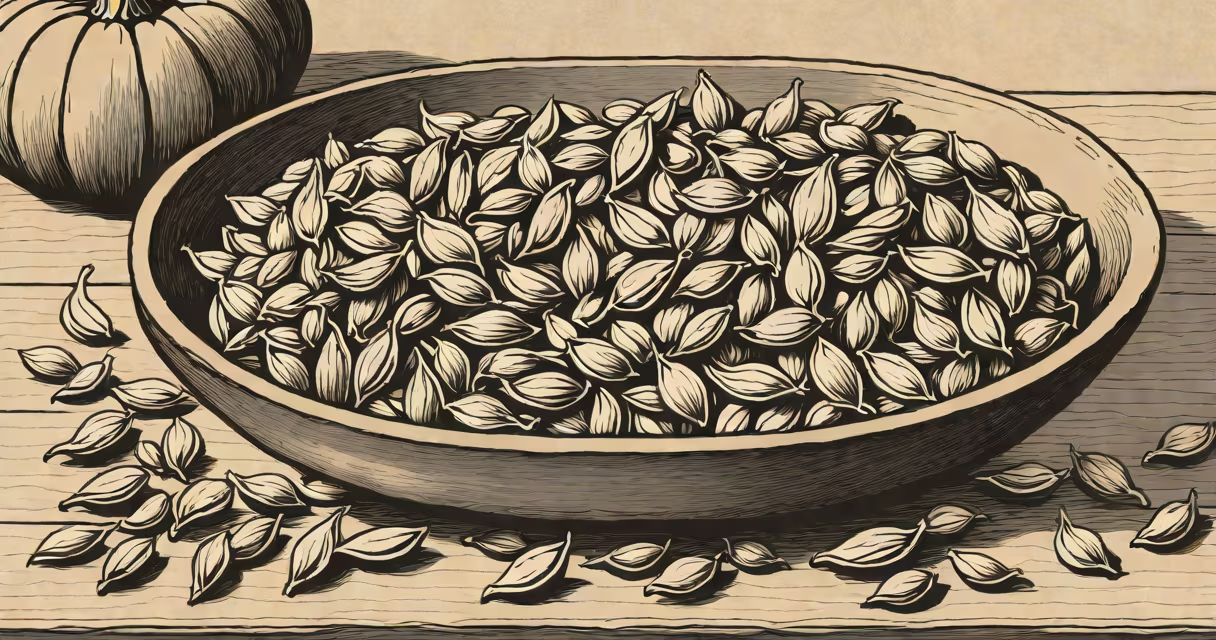
Dogs can eat pumpkin seeds in moderation, as they offer nutritional benefits but may pose risks if fed improperly. Raw, plain, unsalted pumpkin seeds are safest, providing fiber, vitamins, and minerals.
Pumpkin seeds contain antioxidants, omega fatty acids, and zinc, which support immune function and skin health. However, they lack essential amino acids, so they shouldn't replace balanced dog food.
| Type | Safety | Notes |
|---|---|---|
| Raw, unsalted | Safe | Best option, but grind them first to avoid choking hazards. |
| Roasted, unsalted | Safe | Remove excess oil or seasoning before feeding. |
| Salted or flavored | Unsafe | High sodium content can cause dehydration or kidney issues. |
Veterinarians recommend pumpkin seeds for digestive health, particularly for dogs with diarrhea or constipation. The fiber content aids digestion, while the antioxidants help reduce inflammation.
A common misconception is that all pumpkin products are equally safe. Canned pumpkin puree (without additives) is generally safe, but pumpkin pie filling contains sugars and spices that are harmful. Always check labels.
Some pet owners confuse pumpkin seeds with fish oil supplements. While both support skin and coat health, pumpkin seeds provide additional fiber and antioxidants. For more on fish oil, see fish oil for dogs.
Another mistake is assuming all seeds are safe. Apple seeds, for example, contain cyanide and should never be fed to dogs.
Last winter, my dog developed dry, flaky skin despite regular grooming. After consulting my vet, I introduced ground raw pumpkin seeds to his meals. Within two weeks, his coat improved noticeably. I fed him ¼ teaspoon per 10 pounds of body weight, mixed into his food.
However, I learned the hard way that roasted seeds with added salt caused him to drink excessively. Switching back to unsalted, raw seeds resolved the issue. Always introduce new foods gradually and monitor for adverse reactions.