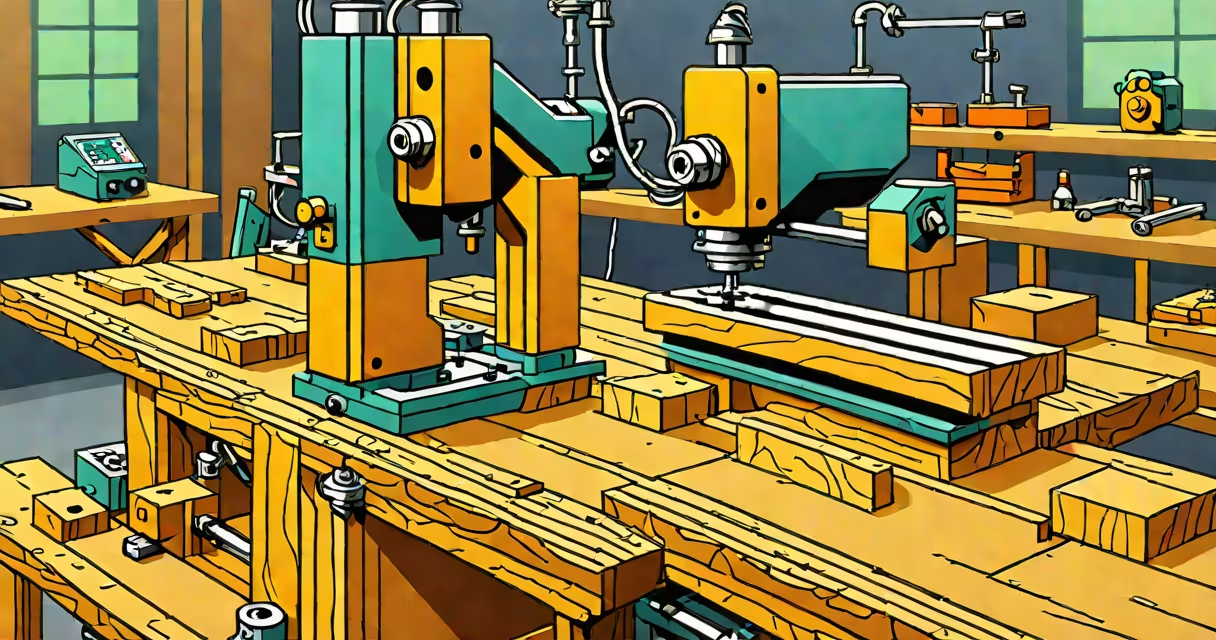
Computer aided manufacturing (CAM) uses software to control machinery in factories, automating production tasks with precise digital instructions. CAM systems convert digital designs into physical objects through automated tools.
CAM software translates computer-aided design (CAD) models into machine-readable code. This code guides tools like lasers, drills, or 3D printers to create products. The process begins with a digital blueprint, which CAM software converts into step-by-step instructions for machines.
For example, a CAM system might instruct a CNC router to cut a specific shape from a sheet of wood. The software calculates tool paths, speeds, and depths, ensuring accuracy. Operators monitor the process but rely on the software for precise execution.
CAM systems vary by application. Common types include:
| Type | Application | Example |
|---|---|---|
| Milling | Cutting solid materials | CNC milling machines |
| Turning | Shaping rotating workpieces | Lathe machines |
| Additive | 3D printing | FDM printers |
| Laser Cutting | Precision cutting with lasers | CO2 laser cutters |
Factories worldwide use CAM for efficiency and consistency. Aerospace companies rely on CAM to produce complex aircraft parts with tight tolerances. Automotive manufacturers use it for mass-producing car components. Even small workshops use CAM for custom furniture or prototypes.
One common misconception is that CAM replaces human workers entirely. While it automates repetitive tasks, skilled operators still oversee operations, troubleshoot issues, and ensure quality. CAM enhances productivity but doesn't eliminate jobs.
I visited a local machine shop that used CAM software to produce custom guitar bodies. The shop owner loaded a CAD file into the CAM software, which generated tool paths for a CNC router. The machine carved the guitar shape from a block of mahogany with millimeter precision. Without CAM, achieving such consistency would have taken days of manual labor.
According to the National Institute of Standards and Technology, CAM reduces production time by up to 70% while improving accuracy. This efficiency makes it indispensable in modern manufacturing.