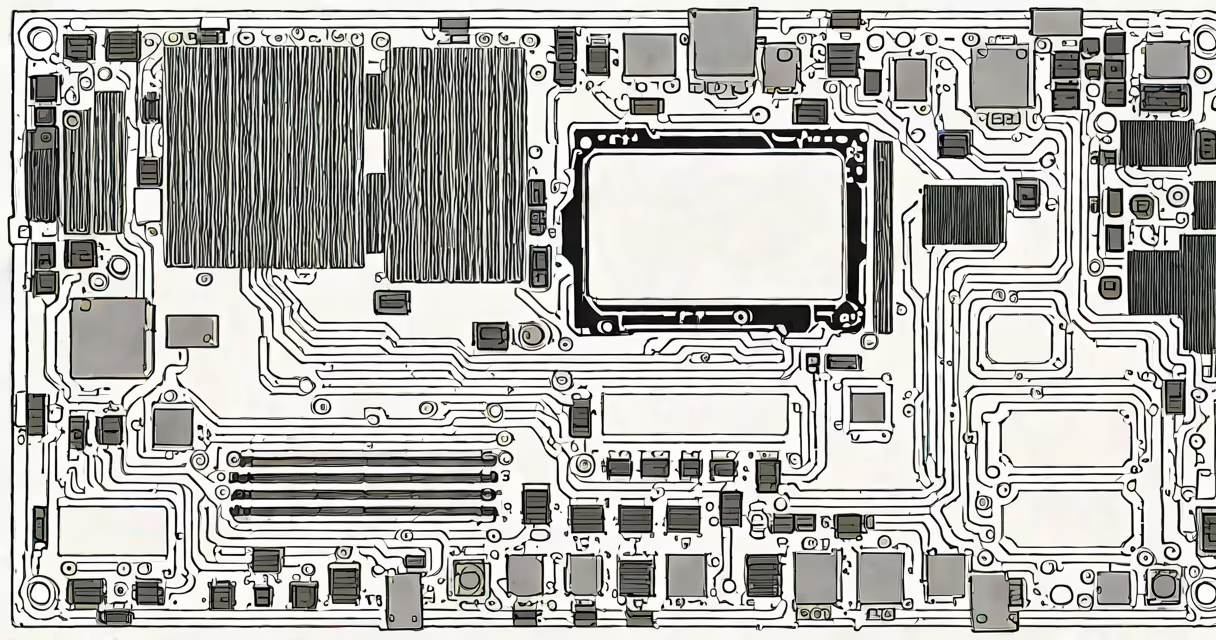
A computer no operating system (OS) relies solely on firmware to function, providing direct access to hardware without an intermediary software layer. This setup is common in embedded systems, diagnostic tools, and during initial hardware testing.
Without an OS, the computer boots directly into firmware, which is low-level software stored in read-only memory (ROM) or flash memory. Firmware handles basic hardware operations like power management and input/output functions. When you power on a computer with no OS, the firmware initializes hardware components and provides a minimal interface for basic tasks.
Computers without an OS fall into several categories:
Computers without an OS are common in environments requiring high reliability, real-time processing, or strict security. For example, many industrial machines use firmware-only systems to ensure consistent performance. In my experience, setting up a bare-metal server for a client's data center simplified maintenance by eliminating OS-related vulnerabilities.
Another common use is during the initial setup of new hardware. Before installing an OS, technicians often boot into firmware to run diagnostics or configure hardware settings. This step ensures all components are functioning correctly before proceeding with OS installation.
Many people assume that a computer without an OS is useless. However, firmware provides essential functionality, such as basic input/output operations and hardware initialization. While it lacks the versatility of a full OS, firmware is sufficient for many specialized tasks.
Consider a scenario where a technician needs to diagnose a faulty hard drive. They boot the computer using a bootable USB drive containing diagnostic software. The software runs directly on the hardware, bypassing the need for an OS. This allows the technician to test the hard drive's health and perform necessary repairs without installing an OS.
For those interested in exploring OS-free computing further, consider experimenting with a Raspberry Pi. By running only firmware, you can observe how the device initializes hardware and performs basic tasks without an OS. This hands-on approach provides valuable insights into the capabilities of firmware-only systems.
When a computer lacks an OS, it relies on firmware to perform essential functions. While this setup may seem limited, it offers significant advantages for reliability, security, and real-time processing. Understanding the role of firmware in OS-free computing can help you appreciate the versatility of these systems and their applications in various industries.