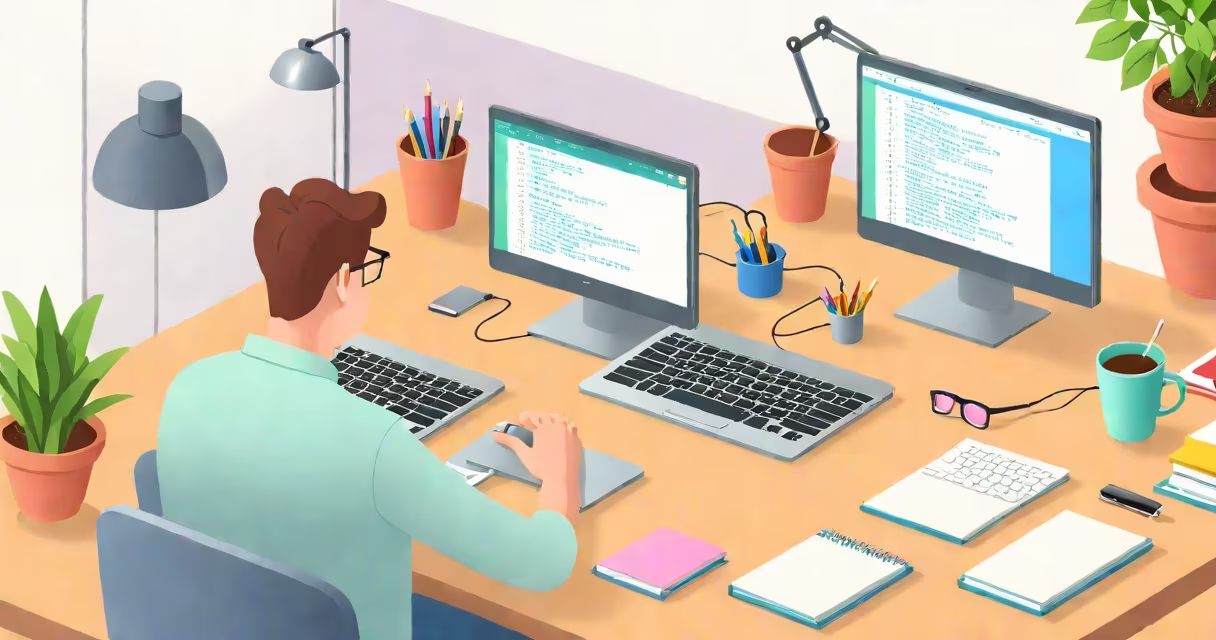
Computer science 1 is an introductory course teaching fundamental concepts like algorithms, programming, and computational thinking. It serves as the foundation for further study in computer science.
Most CS1 courses begin with basic programming concepts, such as variables, loops, and conditionals. Students then progress to more complex topics like functions, arrays, and basic data structures. The goal is to build problem-solving skills using computational methods.
For example, a typical assignment might ask students to write a program that calculates the average of a list of numbers. This exercise teaches loops, arithmetic operations, and input/output handling-all core programming skills.
While curricula vary, most CS1 courses cover these key areas:
Many courses also introduce students to software development tools like integrated development environments (IDEs) and version control systems like Git.
CS1 is typically offered at high schools, community colleges, and universities as part of a broader computer science curriculum. It prepares students for more advanced courses in software engineering, data science, and artificial intelligence.
For instance, Harvard University's CS50, one of the most popular introductory computer science courses, has helped thousands of students transition into tech careers. Many employers also look for candidates with a solid foundation in computer science fundamentals.
One common misconception is that CS1 is only about learning to code. While programming is a significant part of the course, it also emphasizes problem-solving and logical thinking. Another mistake is assuming that prior experience is required-most CS1 courses are designed for beginners.
According to the Association for Computing Machinery (ACM), computational thinking is just as important as coding skills. This includes understanding how to model and analyze problems efficiently.
When I took my first computer science course, we were tasked with creating a simple game using Python. The project required us to apply loops for game logic, conditionals for user input, and functions to organize our code. By the end, I had a working game-and a much better grasp of programming fundamentals.
This hands-on approach is common in CS1 courses, helping students see how theoretical concepts translate into practical applications.