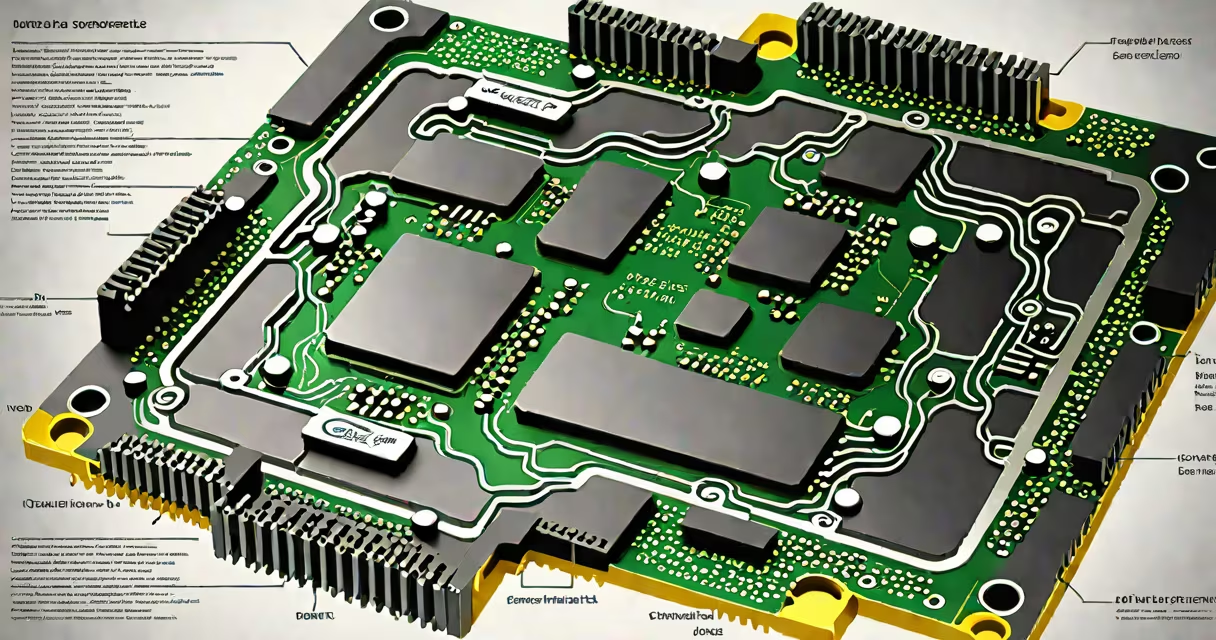
The Core 2 Quad processor is Intel's first quad-core desktop CPU, released in 2006. It combines two dual-core dies on a single package, creating four independent processing units.
Each core in the Core 2 Quad operates independently, allowing the processor to handle four threads simultaneously. This design improves multitasking performance compared to dual-core CPUs. The cores share a single front-side bus interface, limiting communication bandwidth between cores.
| Model | Clock Speed | L2 Cache | FSB Speed | TDP |
|---|---|---|---|---|
| Q6600 | 2.4 GHz | 8 MB | 1066 MHz | 95W |
| Q6700 | 2.66 GHz | 8 MB | 1066 MHz | 95W |
| QX6700 | 2.66 GHz | 8 MB | 1066 MHz | 136W |
The Core 2 Quad was primarily used in high-end desktop computers for tasks requiring significant parallel processing power, such as video editing, 3D rendering, and scientific simulations. Its quad-core design offered a substantial performance boost over dual-core processors for multi-threaded applications.
One common use case was in workstations running professional software like Adobe Premiere Pro or Autodesk Maya. The additional cores allowed these applications to process multiple tasks simultaneously, reducing rendering times compared to dual-core systems.
Many users confuse the Core 2 Quad with truly monolithic quad-core designs. Unlike later processors such as the Core i7-4770, which integrate all cores onto a single die, the Core 2 Quad actually consists of two separate dual-core dies on a single package. This architecture limited inter-core communication compared to later unified quad-core designs.
The Core 2 Quad marked Intel's entry into the quad-core market, setting the stage for more advanced multi-core architectures. While it's outdated by today's standards, it played a important role in demonstrating the benefits of multi-core processing to consumers and businesses alike.