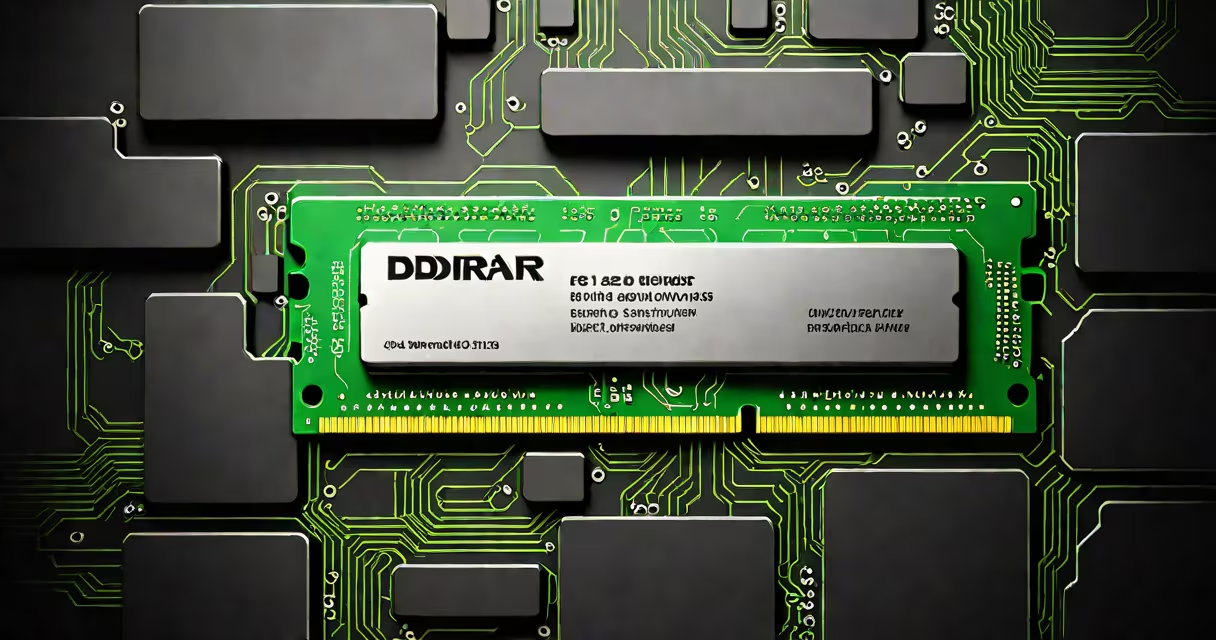
DDR4 desktop memory is a type of random-access memory (RAM) designed for personal computers, offering faster speeds, lower power consumption, and higher capacity than its predecessor, DDR3. It operates at voltages between 1.05V and 1.2V, compared to DDR3's 1.35V-1.65V.
DDR4 memory transfers data twice per clock cycle, unlike older SDR (single data rate) memory that transfers once. This "double data rate" design allows DDR4 to achieve higher bandwidth. For example, a DDR4-3200 module runs at an effective 3200 MHz while its internal clock operates at 1600 MHz.
DDR4 modules come in different speed grades, measured in megatransfers per second (MT/s). Common speeds include:
| Speed Grade | Effective Speed | Typical Use |
|---|---|---|
| DDR4-2133 | 2133 MT/s | Budget builds, office PCs |
| DDR4-2400 | 2400 MT/s | Mainstream desktops |
| DDR4-3200 | 3200 MT/s | Mid-range gaming, productivity |
| DDR4-3600 | 3600 MT/s | High-end gaming, content creation |
Most modern motherboards support speeds up to DDR4-3200 or DDR4-3600, with some high-end models supporting DDR4-4000 or higher.
DDR4 became the standard for several reasons:
For example, a DDR4-3200 kit with 16GB per module offers better performance than a DDR3-1600 kit with the same total capacity.
Many users confuse DDR4 with other memory types or assume it's outdated. Here are key corrections:
I once tested a DDR4-3200 kit pushed to DDR4-3600 on a Z390 motherboard. The performance gain was noticeable in benchmarks, but stability required careful BIOS tuning.
Though DDR5 is gaining traction, DDR4 remains dominant in desktops. Its affordability and widespread compatibility ensure it will stay relevant for years. Manufacturers continue to push speeds beyond DDR4-4000 for enthusiasts, while mainstream users benefit from steady price drops.
For most users, DDR4 offers the best balance of performance and value. Whether for gaming, productivity, or general use, it delivers reliable results.