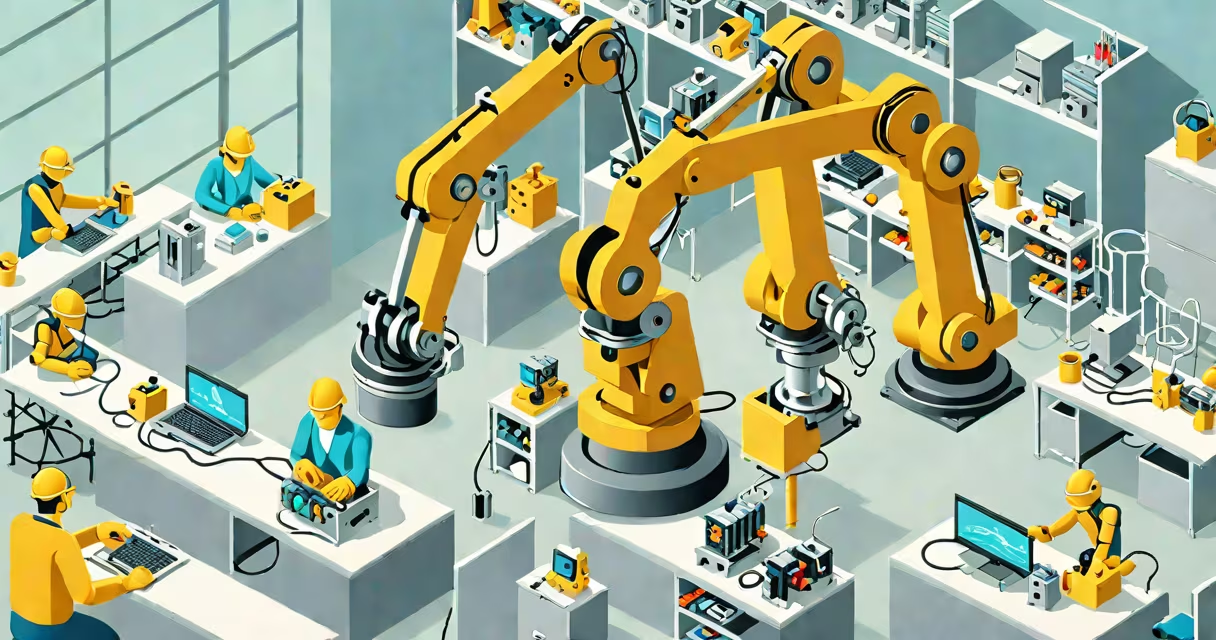
Automation in business is the use of technology to perform repetitive tasks with minimal human intervention, improving efficiency and reducing errors. It involves software, hardware, or a combination of both to simplify workflows, improve productivity, and lower operational costs.
Business automation uses predefined rules and algorithms to execute tasks. For example, a company might use software to automatically send invoices to clients once a project is marked complete. This eliminates the need for manual data entry and reduces the risk of human error.
Automation in business can be categorized into several types:
| Type | Description | Example |
|---|---|---|
| Robotic Process Automation (RPA) | Software robots mimic human interactions with digital systems | Automating data entry from emails into a CRM system |
| Workflow Automation | Streamlining sequences of tasks within a process | Automating approval processes for expense reports |
| Marketing Automation | Software platforms automate marketing actions | Sending targeted emails based on customer behavior |
| Manufacturing Automation | Using machinery to perform tasks in production lines | Assembly line robots in car manufacturing |
Many people confuse automation with full artificial intelligence. While AI can improve automation, most business automation tools rely on predefined rules rather than learning algorithms. For instance, a chatbot that answers frequently asked questions is automation, while a system that learns from customer interactions to improve responses is AI.
I implemented such a system for a client last year. The company processed invoices 70% faster and reduced errors by 90%. The tool integrated smoothly with their existing accounting software, requiring minimal training for staff.
Automation offers several advantages:
While automation offers significant benefits, it also presents challenges. Implementing automation requires initial investment and integration with existing systems., employees may need training to adapt to new automated processes. According to a report by McKinsey, companies often underestimate the time and resources required for successful automation implementation.
Another common mistake is automating inefficient processes. Before automating, businesses should review and improve their workflows. Automating a flawed process only amplifies the inefficiencies.