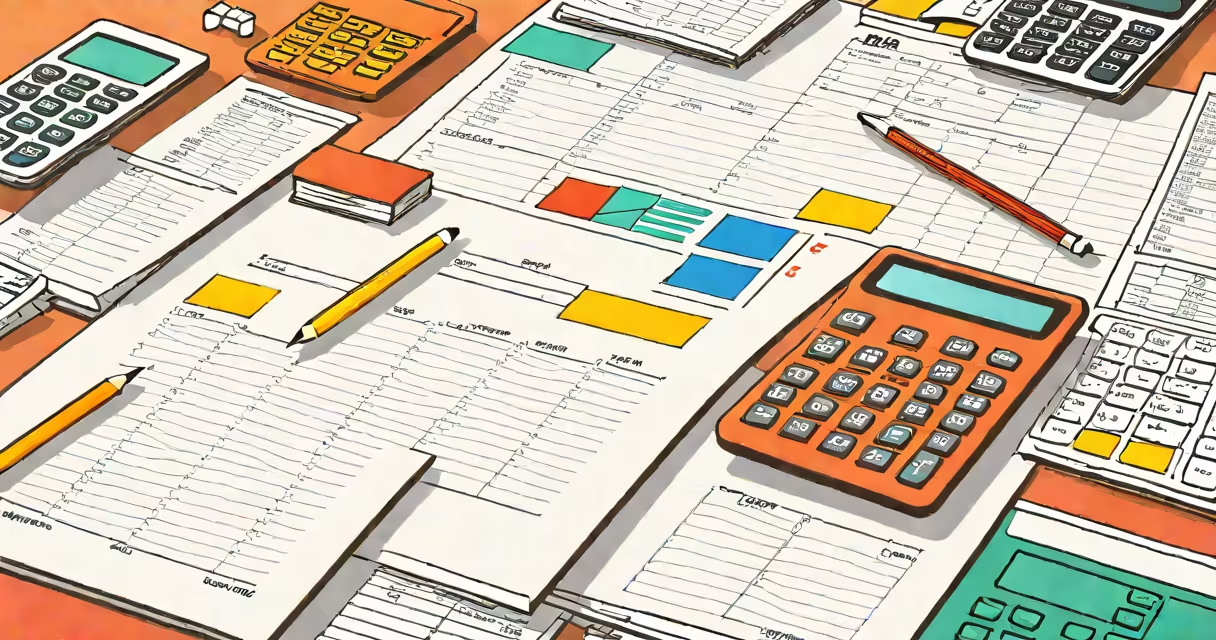
A worksheet in accounting is a multi-column spreadsheet used to organize and summarize financial data before preparing official financial statements. It serves as an intermediary tool between the general ledger and financial reports.
An accounting worksheet collects data from the general ledger, adjusts entries as needed, and calculates totals for the balance sheet, income statement, and cash flow statement. Unlike permanent accounting records, worksheets are temporary documents created at the end of an accounting period.
For example, a small business might use a worksheet to:
Standard accounting worksheets contain these key sections:
| Section | Purpose |
|---|---|
| Trial Balance | Lists unadjusted account balances from the general ledger |
| Adjustments | Records adjusting journal entries (e.g., depreciation, accruals) |
| Adjusted Trial Balance | Shows updated account balances after adjustments |
| Financial Statements | Presents balance sheet, income statement, and cash flow statement data |
Many people confuse accounting worksheets with other financial tools:
One common mistake is assuming all businesses use worksheets. Larger companies often use specialized software that combines worksheet functions with other features, while smaller businesses might skip worksheets entirely and go straight to financial statements.
Consider a bakery with $50,000 in assets, $20,000 in liabilities, and $15,000 in equity at year-end. Its worksheet would:
After completing the worksheet, the bakery would prepare its official financial statements using the adjusted figures.
Accountants typically create worksheets during these situations:
According to the American Institute of CPAs, worksheets help ensure accuracy in financial reporting by providing a clear audit trail of adjustments made to account balances before finalizing financial statements.
I've seen worksheets used effectively in both paper and digital formats. In one case, a client transitioning accounting created worksheets to verify data migration accuracy between systems.
For complex organizations, worksheets may include additional sections for consolidated entities or special projects. Some advanced versions even integrate with budgeting and forecasting tools.
Remember, while worksheets are invaluable for internal use, they shouldn't be shared externally without proper formatting and review. Always verify worksheet calculations match your financial statements before distribution.