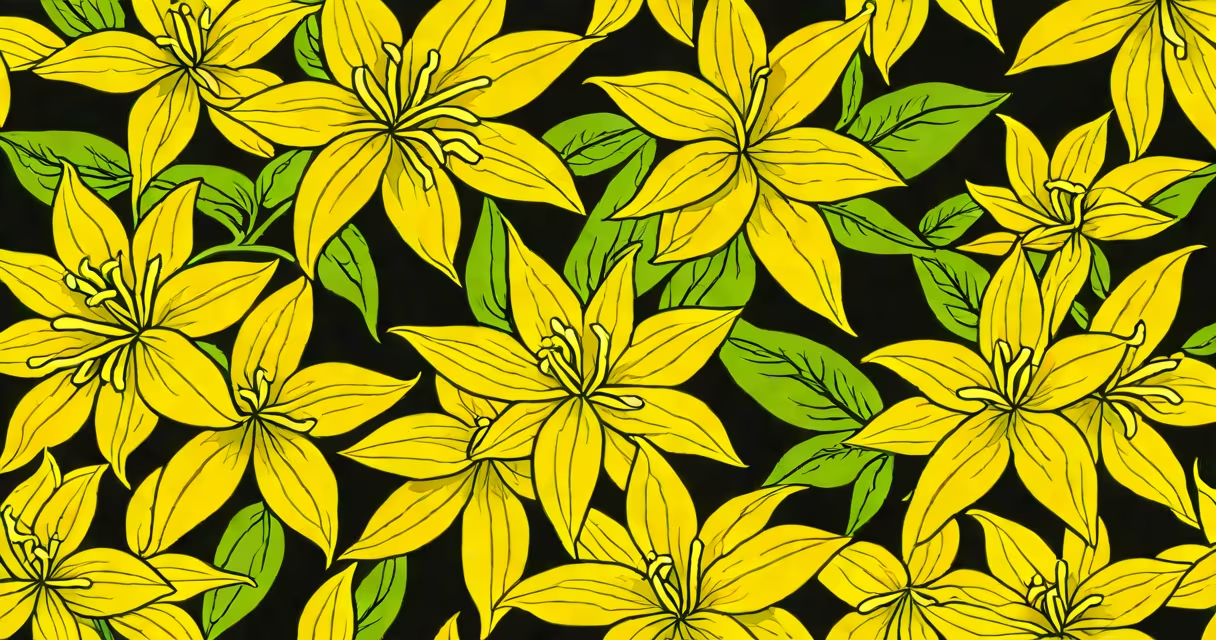
Ylang ylang is a tropical tree (Cananga odorata) whose fragrant flowers produce an essential oil widely used in perfumery and aromatherapy. The oil is extracted through steam distillation of the flowers, which grow in clusters on the tree.
The extraction process requires careful handling. Flowers are harvested at dawn when their fragrance is strongest. Steam distillation separates the volatile compounds, producing a thick, golden-yellow oil. The process yields multiple grades based on distillation time, with the highest grade being the most aromatic.
| Type | Extraction Time | Characteristics |
|---|---|---|
| Extra | First few minutes | Most floral, sweet, and expensive |
| First | Next 2-3 hours | Balanced floral and fruity notes |
| Second | Following hours | Lighter, less intense aroma |
| Third | Final distillation | Weakest fragrance, often blended |
Perfumers value ylang ylang for its rich, exotic scent. It appears in high-end fragrances like Chanel No. 5 and Jean Patou's Joy. In aromatherapy, it's used to reduce stress and lower blood pressure. A study published in the Journal of Ethnopharmacology found that inhaling ylang ylang oil reduced heart rate and blood pressure in participants.
Many confuse ylang ylang with jasmine or tuberose, but its floral notes are sweeter and more tropical. Unlike synthetic alternatives, authentic ylang ylang oil has a complex profile that evolves over time. Some perfumers dilute it with lighter oils to balance its intensity.
I once tested ylang ylang oil in a DIY perfume blend. The extra grade's potency surprised me-just two drops transformed the entire composition. Its longevity is impressive, lasting over 24 hours on skin.