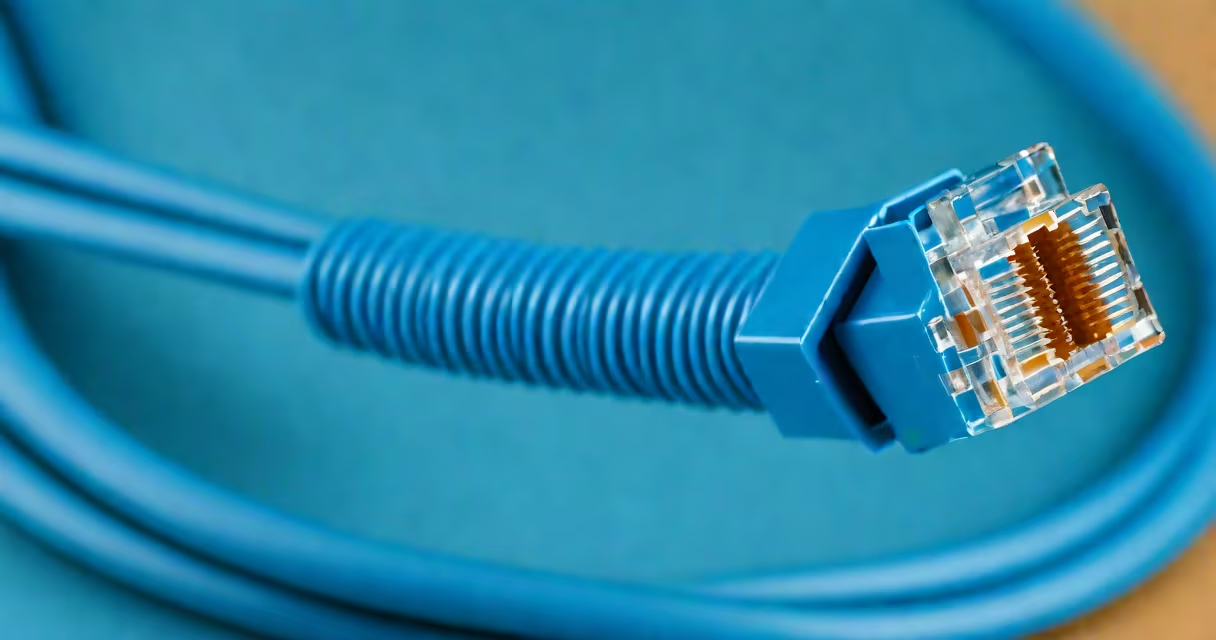
A UTP cable is an unshielded twisted pair cable used primarily for wired Ethernet networks. It consists of four pairs of copper wires twisted together to reduce electromagnetic interference.
UTP cables transmit data via electrical signals sent through the copper wires. The twisting of wire pairs helps cancel out electromagnetic interference from nearby cables or electronic devices. Each pair transmits data in both directions simultaneously using different frequencies.
UTP cables come in several categories, each with different performance specifications:
UTP cables are the standard for wired local area networks (LANs). They connect devices like computers, routers, and switches in homes, offices, and data centers. Most internet service providers use UTP cables for wired connections to customer premises.
One common application is connecting a modem to a router using a Cat5e UTP Ethernet cable. This provides a stable, high-speed connection for home networks. In offices, UTP cables form the core of internal networks, connecting multiple devices to central servers.
Many people confuse UTP cables with shielded twisted pair (STP) cables. The key difference is that STP cables have a metal foil or braid shielding around the wire pairs to provide additional protection against interference. UTP cables rely solely on the twisting of pairs for interference reduction.
According to the Telecommunications Industry Association, UTP cables are sufficient for most indoor applications where interference levels are moderate. STP cables are typically used in environments with high levels of electrical noise, such as industrial settings or near power lines.
When installing UTP cables, it's important to avoid sharp bends (minimum bend radius is typically 4 times the cable diameter) and to keep them away from sources of strong electromagnetic interference. Proper termination with RJ-45 connectors is essential for reliable performance.
I once helped set up a small office network using Cat5e UTP cables. We carefully routed the cables along walls and under floors, avoiding proximity to fluorescent lighting fixtures that could cause interference. The resulting network performed flawlessly for several years.