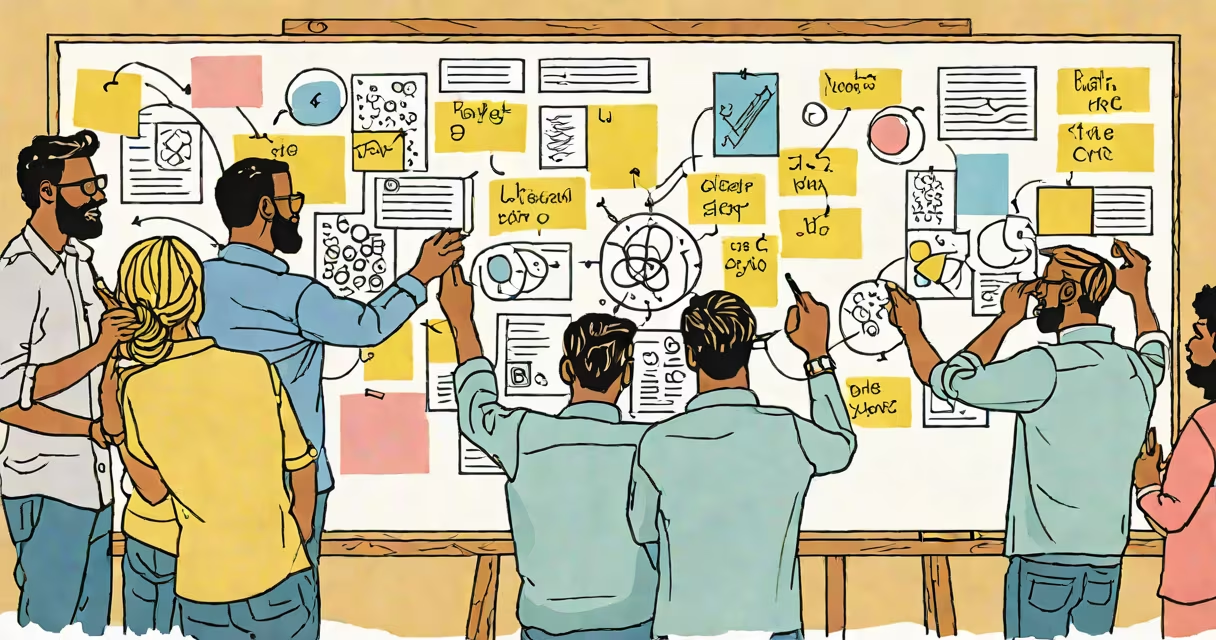
Design thinking training teaches structured creativity to solve complex problems through human-centered design processes. It combines empathy, experimentation, and iteration to develop new solutions.
Design thinking follows five key stages: empathize, define, ideate, prototype, and test. Teams observe users, identify problems, brainstorm solutions, create prototypes, and refine them based on feedback. For example, Airbnb used design thinking to redesign its search function by understanding user pain points.
| Type | Focus | Duration |
|---|---|---|
| Workshops | Introductory concepts | 1-3 days |
| Certification programs | Complete training | 2-6 months |
| Corporate training | Customized for organizations | Varies |
Design thinking training is used in businesses, nonprofits, and government agencies to improve. Companies like IBM and Google use it to develop new products and services. The process helps teams tackle ambiguous challenges by focusing on user needs.
Many think design thinking is only for designers. However, it's a cross-disciplinary approach used in fields like healthcare and education. Another myth is that it's purely creative, but it balances creativity with analytical thinking. For instance, the Mayo Clinic uses design thinking to improve patient care by understanding doctor and patient interactions.
I once attended a design thinking workshop where we redesigned a coffee shop experience. We interviewed customers, identified pain points, and prototyped solutions. The hands-on approach made the process clear and practical.
Design thinking training equips teams with tools to solve complex problems creatively. Whether in business or education, it fosters innovation by focusing on user needs and iterative testing. For more on applying these principles, see how to design a house.