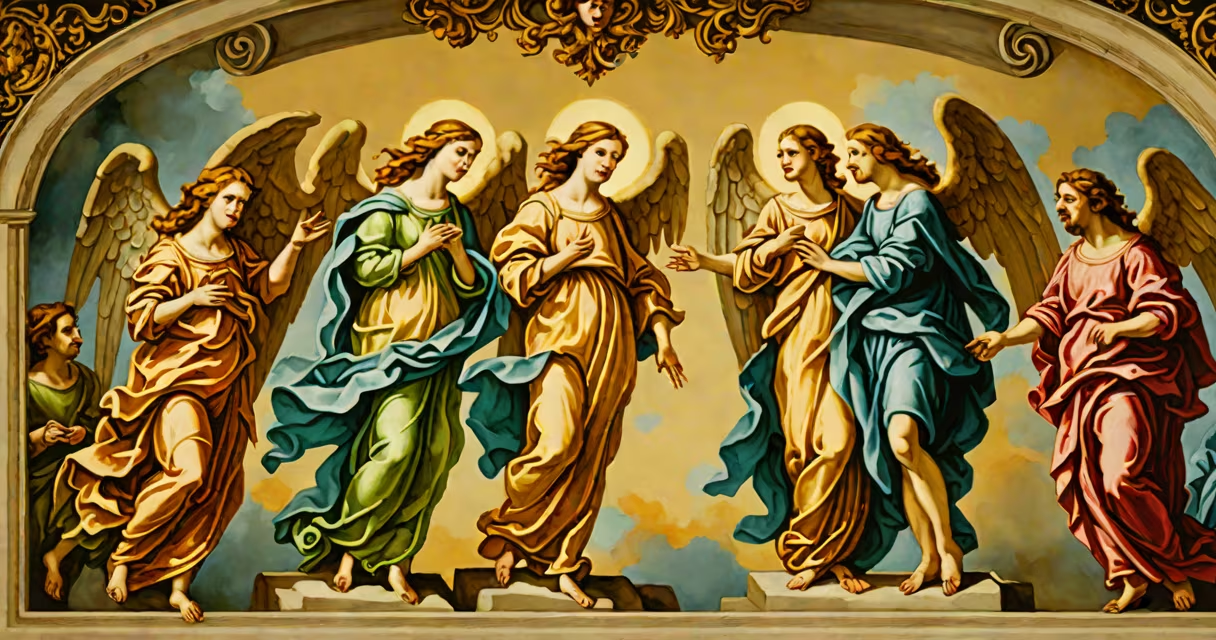
Angels possess free will, meaning they can choose their actions independently of divine coercion. This capacity for autonomous decision-making is central to their nature as created beings.
According to Christian theology, God created angels as spiritual beings with intellect and will. Their free will allows them to serve God voluntarily rather than through compulsion. The Bible presents angels as making choices, such as when Satan and his followers rebelled against God (Isaiah 14:12-15).
| Type | Role | Biblical Reference |
|---|---|---|
| Seraphim | Guardians of God's holiness | Isaiah 6:2-6 |
| Cherubim | Protectors of God's glory | Genesis 3:24 |
| Archangels | Messengers of major events | Jude 1:9 |
The concept of angelic free will appears in religious texts, philosophical debates, and artistic interpretations. It explains why some angels chose to rebel while others remained faithful. For example, the story of Lucifer's fall illustrates the consequences of misusing free will (Luke 10:18).
Some mistakenly believe angels are robots following programmed commands. However, the Bible portrays them as moral agents capable of good or evil choices. Another myth is that fallen angels cannot repent, but this contradicts the idea of free will.
Angels' free will extends to their worship. They choose to praise God (Psalm 103:20), demonstrating voluntary devotion rather than forced obedience. This aligns with the idea that love requires freedom.