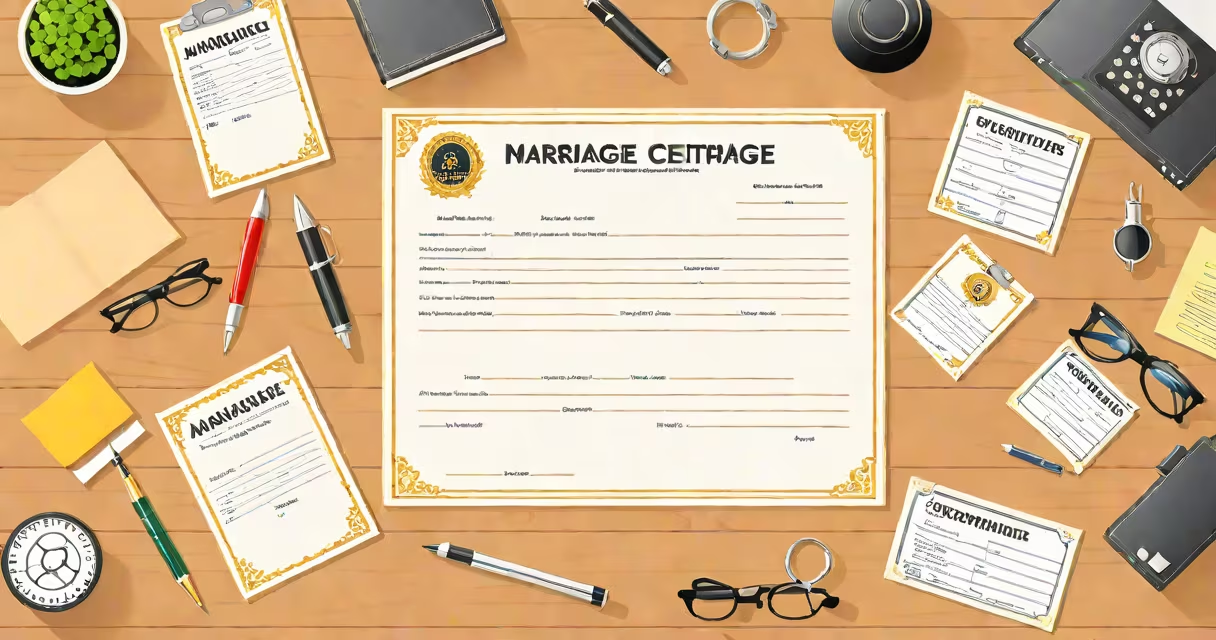
A name change after marriage requires your marriage certificate, current ID, and proof of residency. These documents verify your identity and legal right to change your name.
After your wedding, you'll submit these documents to government agencies to update your name on official records. The process varies by state but typically involves filling out forms and paying fees. Some agencies allow online submissions, while others require in-person visits.
You'll need several key documents to complete a name change:
Some agencies may also require a signed affidavit or notarized statement confirming your intent to change your name.
You'll submit these documents to various institutions to update your name on legal records. Common places include:
Updating your name ensures consistency across all legal and financial records.
Many people assume they only need their marriage certificate, but most agencies require additional proof of identity. For example, the Social Security Administration requires both your marriage certificate and current ID.
Another mistake is waiting too long to update your name. Some agencies have strict deadlines for submitting name change requests.
To update her driver's license, Sarah visited her local DMV with her marriage certificate, current driver's license, and a utility bill showing her new address. She filled out the name change form, paid the $20 fee, and received her updated license within two weeks.
When I changed my last name after marriage, I visited the DMV first because I needed my updated driver's license to change my name with other agencies. The process took about 30 minutes, including waiting in line. I submitted my marriage certificate, driver's license, and a bank statement as proof of residency. The DMV clerk processed my request on the spot, and I received my new license in the mail within a week.