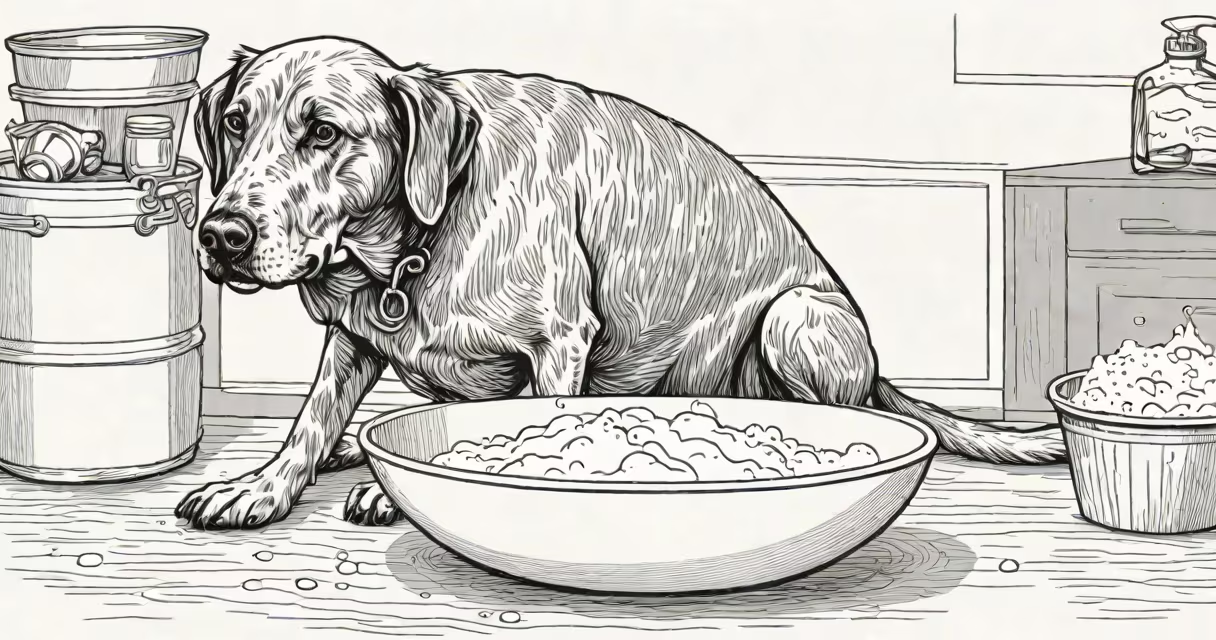
A dog throwing up white foam and experiencing diarrhea often indicates gastrointestinal distress, ranging from mild upset to severe conditions requiring urgent veterinary care.
Common Causes
Several factors can trigger these symptoms:
Dietary indiscretion: Eating garbage, spoiled food, or inedible objects
Food allergies or intolerances: Common allergens include beef, dairy, wheat, eggs, chicken, lamb, fish, soy, or pork
Parasites: Roundworms, hookworms, whipworms, or giardia
Viral infections: Canine parvovirus or coronavirus
Bacterial infections: Salmonella or E. coli
Toxins or poisons: Ingestion of antifreeze, rodent poison, or certain plants
Pancreatitis: Inflammation of the pancreas
Foreign objects: Swallowed toys, socks, or other non-food items
When to Seek Emergency Care
Contact your veterinarian immediately if your dog exhibits any of these signs alongside vomiting and diarrhea:
Lethargy or weakness
Blood in vomit or stool
Severe abdominal pain or bloating
Collapse or inability to stand
Prolonged vomiting (more than 12 hours) or frequent diarrhea (more than 24 hours)
According to the American Veterinary Medical Association, prompt treatment is important for conditions like parvovirus, which has a mortality rate of 90% without intervention.
Home Care for Mild Cases
For mild cases with no other concerning symptoms, you can try:
Withholding food for 12-24 hours
Providing small amounts of water frequently
Offering a bland diet (boiled chicken and rice) once vomiting stops
Monitoring closely for worsening symptoms
I once cared for a neighbor's dog that ate spoiled meat and developed these symptoms. After 24 hours of fasting and water monitoring, the dog recovered fully within 48 hours without veterinary intervention.
Prevention Tips
To reduce the risk of gastrointestinal issues:
Feed a high-quality diet appropriate for your dog's age and health status
Store trash securely and keep toxic plants out of reach
Administer regular parasite prevention medications
Keep your dog away from potentially poisonous substances
Misconceptions About Dog Vomiting
Many pet owners assume vomiting is always harmless, but white foam often indicates bile or stomach acid, suggesting more serious issues than simple indigestion. Unlike occasional vomiting, persistent episodes with diarrhea require professional evaluation.
If you've experienced similar symptoms, learn more about human gastrointestinal distress and when to seek medical attention.