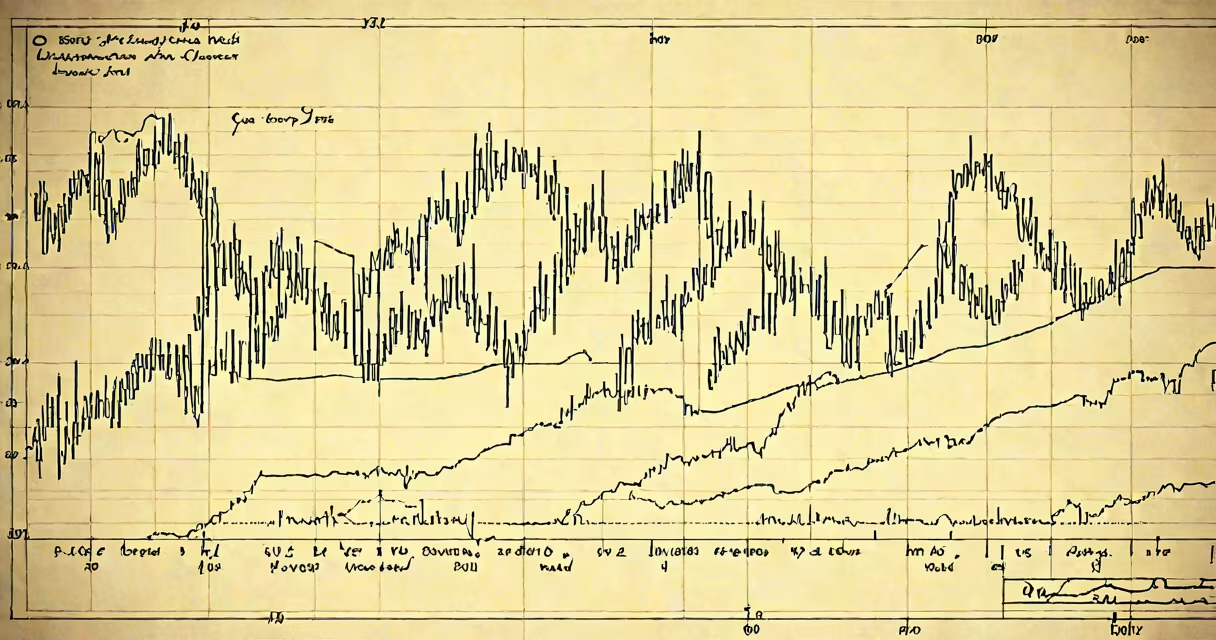
The Dow Jones Industrial Average (DJIA) is a price-weighted stock market index tracking 30 large U.S. companies, often called blue-chip stocks. Investors use it as a benchmark for the market and their portfolios.
The DJIA calculates its value by summing the prices of its 30 components and dividing by a divisor adjusted for stock splits and corporate actions. Unlike other indexes, it doesn't account for company size or market capitalization.
For example, if one component's stock price rises, the entire index moves accordingly, even if the company's market cap is smaller than others in the index.
| Company | Sector | Industry |
|---|---|---|
| UnitedHealth Group | Healthcare | Managed Healthcare |
| Microsoft | Technology | Software |
| Apple | Technology | Consumer Electronics |
The DJIA provides a snapshot of the U.S. economy and investor sentiment. Many investors compare their portfolio performance to the Dow Jones to assess their strategies.
However, the DJIA has limitations. It represents only 30 companies, which may not reflect the broader market. For a more complete view, investors often look at other indexes like the S&P 500.
Many investors confuse the DJIA with the S&P 500 or Nasdaq. While all three measure market performance, they differ in composition and calculation methods. The Dow Jones focuses on large, established companies, while the S&P 500 includes 500 companies across various industries.
Another misconception is that the Dow Jones is a value-weighted index. In reality, it's price-weighted, meaning higher-priced stocks have a greater impact on the index's movement.
Investors can gain exposure to the DJIA through exchange-traded funds (ETFs) or mutual funds that track the index. For example, the E-Mini Dow Jones futures contract allows traders to speculate on the index's performance.
When I first started investing, I tracked the Dow Jones daily to understand market trends. Over time, I learned to balance my portfolio with other indexes for a more diversified approach.
The Dow Jones Industrial Average is a valuable tool for investors, offering insights into the performance of major U.S. companies. However, it's essential to recognize its limitations and complement it with other indexes for a well-rounded investment strategy.