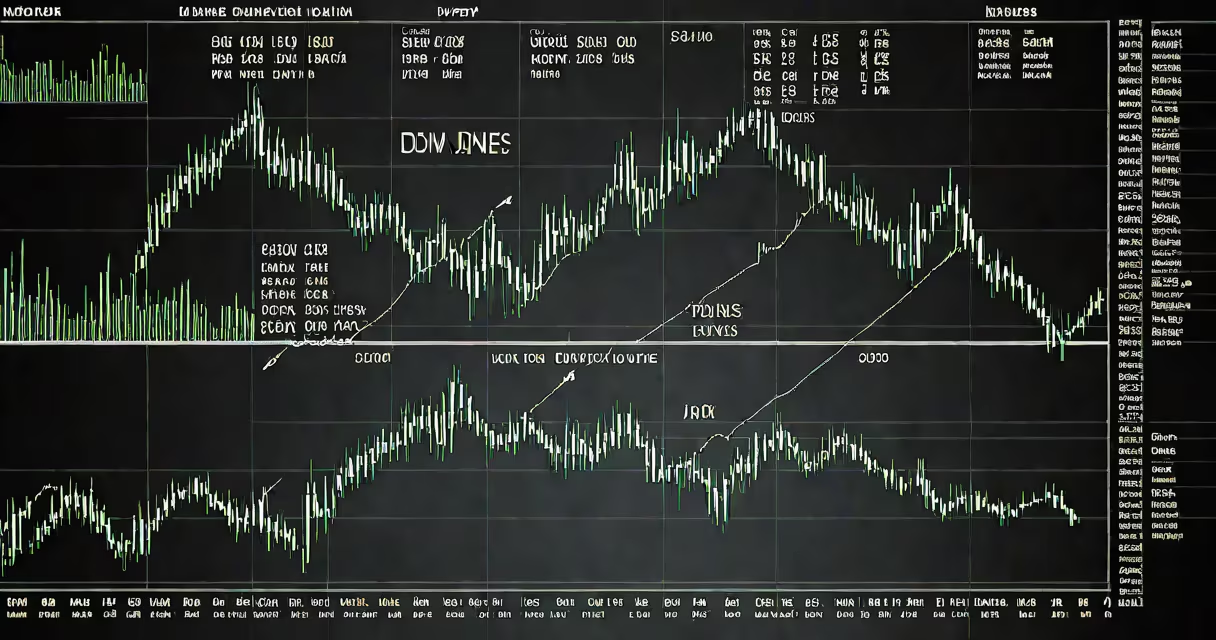
The Dow Jones last close is the closing price of the Dow Jones Industrial Average (DJIA) from the previous trading session. This figure represents the total value of 30 major U.S. publicly traded companies, weighted by their stock price.
The DJIA is calculated using a price-weighted index, meaning the impact of each stock on the index is based on its price per share rather than its market capitalization. The Dow Jones last close is determined by the average of the stock prices of the 30 companies included in the index at the end of the trading day.
For example, if the Dow Jones last close was 36,000 points, this means the combined average stock price of the 30 companies in the index was 36,000 dollars. Investors use this figure to gauge the performance of the stock market and make informed decisions about buying or selling stocks.
The DJIA includes some of the largest and most influential companies in the United States, such as Apple, Microsoft, and Coca-Cola. These companies represent various industries, including technology, finance, healthcare, and consumer goods.
The composition of the Dow Jones Industrial Average is periodically reviewed and adjusted by S&P Dow Jones Indices, the organization responsible for maintaining the index. Companies may be added or removed based on factors such as market performance, industry representation, and company size.
The Dow Jones last close is an important indicator of the health of the U.S. stock market. Investors, analysts, and financial institutions use this figure to assess market trends, identify potential investment opportunities, and make strategic decisions about their portfolios.
For example, if the Dow Jones last close shows a significant increase from the previous day, investors may interpret this as a sign of a bullish market and consider buying more stocks. Conversely, a decrease in the Dow Jones last close may indicate a bearish market and prompt investors to sell their stocks.
One common misconception is that the Dow Jones last close reflects the performance of the entire U.S. stock market. In reality, the DJIA only represents a small portion of the market and is primarily focused on large-cap companies. Other indices, such as the S&P 500 and the Nasdaq Composite, provide a broader view of market performance.
Another misconception is that the Dow Jones last close is the only factor investors should consider when making investment decisions. While the Dow Jones last close is an important indicator, investors should also consider other factors such as company earnings, economic trends, and geopolitical events.
Investors can access the Dow Jones last close through various financial websites, stock market apps, and brokerage platforms. These resources provide real-time updates on the DJIA and other stock market indices, allowing investors to stay informed about market trends and make data-driven investment decisions.