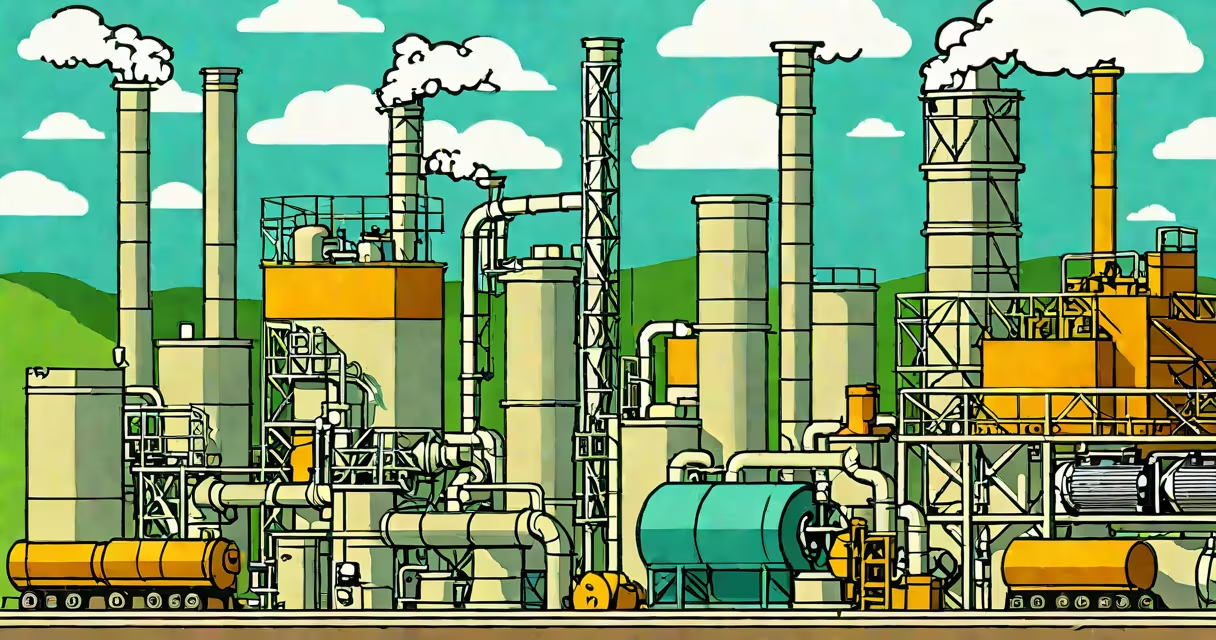
Electricity production from biomass generates power by burning organic materials like wood, agricultural waste, or dedicated energy crops. This process converts chemical energy stored in biomass into electrical energy through combustion, gasification, or anaerobic digestion.
Biomass power plants operate similarly to coal plants but use organic matter instead. The biomass is burned to produce steam, which drives a turbine connected to a generator. Some advanced systems convert biomass into gas first, then burn that gas for cleaner combustion.
For example, a typical 20-megawatt biomass plant processes about 600 tons of biomass daily. The U.S. Department of Energy notes that biomass power plants can achieve efficiency rates of 20-40%, depending on the technology used.
| Type | Examples | Typical Use |
|---|---|---|
| Wood Waste | Sawdust, wood chips, bark | Forestry byproducts, construction waste |
| Agricultural Residues | Corn stalks, rice husks, sugarcane bagasse | Crop harvesting leftovers |
| Energy Crops | Switchgrass, miscanthus, hemp | Dedicated fast-growing plants |
| Municipal Waste | Food scraps, yard waste, paper | Landfill diversion programs |
Biomass electricity reduces greenhouse gas emissions compared to fossil fuels. The U.S. Environmental Protection Agency reports that biomass power plants emit 77% less carbon dioxide than coal plants per unit of energy produced.
Biomass is also renewable and can be sustainably managed. Unlike finite fossil fuels, biomass can be regrown or replenished. However, it's often confused with other renewable sources like solar or wind. Unlike those, biomass requires physical material to generate power, making supply chain management critical.
Many assume biomass power is always carbon-neutral. While biomass releases CO₂ when burned, the plants absorb CO₂ as they grow, creating a closed loop. However, this balance only holds if new biomass regrows to replace what's burned-a process that takes time.
Another misconception is that biomass power is inefficient. Modern technologies like co-firing (combining biomass with coal) improve efficiency. For instance, a plant in Denmark co-fires biomass with coal, increasing efficiency by 15% while reducing emissions.
The Drax Power Station in North Yorkshire, UK, is one of the largest biomass power plants in the world. It converts wood pellets into electricity, supplying about 12% of the UK's electricity needs. Drax has reduced its carbon emissions by over 90% since switching.
While biomass power is a valuable renewable energy source, it's not without challenges. Land use, transportation costs, and air pollution from incomplete combustion remain concerns. Still, when managed responsibly, electricity production from biomass is important for sustainable energy portfolios.