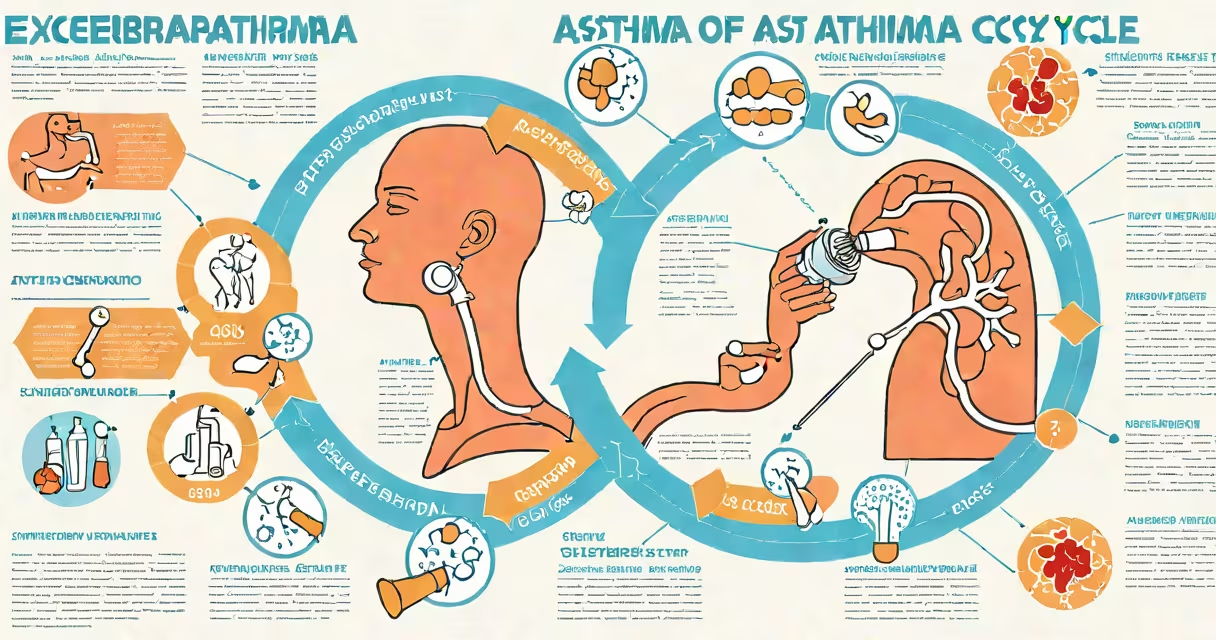
Exacerbation of asthma refers to a sudden worsening of asthma symptoms, typically triggered by environmental factors or infections. These episodes cause increased airway inflammation, mucus production, and bronchoconstriction, leading to breathing difficulties.
During an exacerbation, the airways become swollen and filled with mucus, making it harder to breathe. The muscles around the airways tighten, further narrowing the passage. This process can happen quickly, sometimes within hours, or develop over several days.
| Type | Severity | Duration |
|---|---|---|
| Mild | Increased symptoms but manageable with rescue inhaler | Hours to days |
| Moderate | Significant breathing difficulty, may require oral steroids | Days to weeks |
| Severe | Life-threatening, requires emergency medical attention | Variable |
Asthma exacerbations are most frequently triggered by:
Preventing exacerbations focuses on identifying and avoiding triggers while maintaining good asthma control. Patients should follow their asthma action plan, which typically includes daily controller medications and quick-relief inhalers for acute symptoms.
When an exacerbation occurs, treatment may involve:
Many people believe asthma attacks come without warning, but most have identifiable triggers. Another common myth is that only children experience asthma exacerbations, though adults with asthma are also at risk.
Contrary to popular belief, exercise doesn't cause asthma - it's often the cold air during exercise that triggers symptoms. Proper warm-up and using a scarf to cover the mouth can help prevent exercise-induced exacerbations.
As someone who has managed asthma for years, I've learned the importance of carrying my rescue inhaler at all times. During pollen season, I monitor air quality forecasts and limit outdoor activities on high-pollution days. When I notice early signs of an exacerbation - like persistent coughing or wheezing - I take my controller medication immediately and contact my doctor if symptoms worsen.