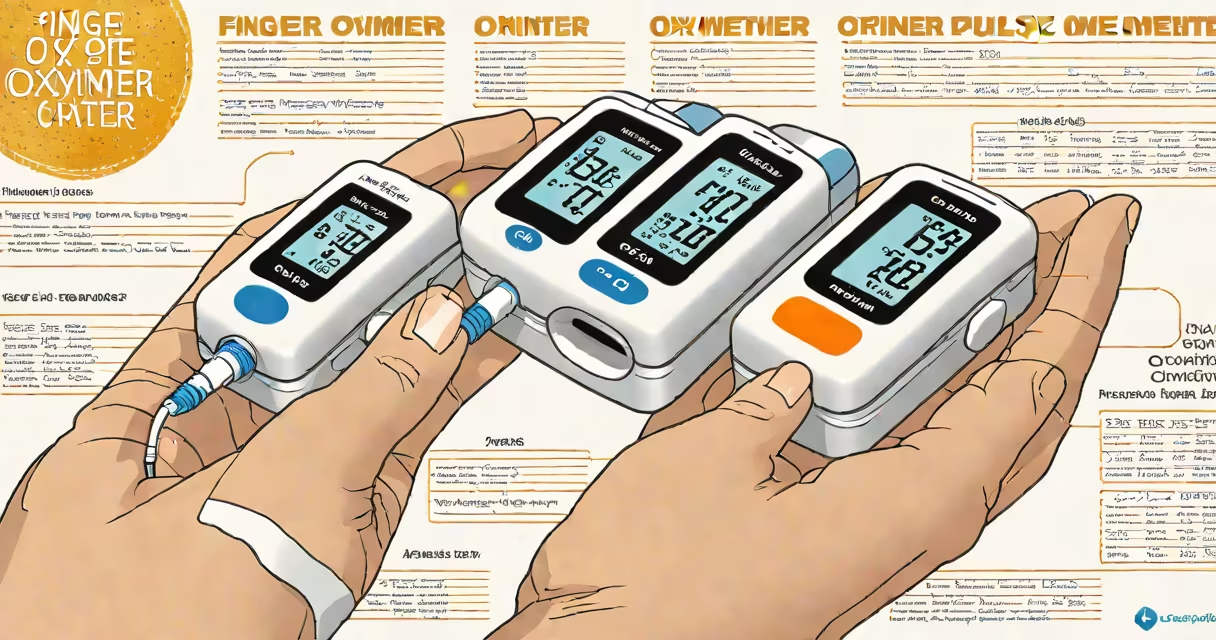
A finger pulse oximeter readings chart displays normal ranges for oxygen saturation (SpO2) and pulse rate, helping users interpret their measurements. These devices measure blood oxygen levels and heart rate using light absorption.
Pulse oximeters pass red and infrared light through a fingertip to measure oxygen saturation in arterial blood. The device calculates SpO2 by comparing light absorption at different wavelengths. A photodetector reads the light transmitted through the finger, and the oximeter processes this data to display SpO2 and pulse rate.
Finger pulse oximeters are the most common type, but other versions exist:
| Type | Use Case | Accuracy |
|---|---|---|
| Finger pulse oximeter | Home use, sports, aviation | ±2% for SpO2 70-100% |
| Wrist-worn pulse oximeter | Fitness tracking | Less accurate than finger models |
| Pediatric pulse oximeter | Infants and children | Same as adult finger models |
According to the FDA, finger pulse oximeters are generally the most accurate for home use.
Normal SpO2 levels range from 95% to 100%. Pulse rates typically fall between 60 and 100 beats per minute (bpm) for adults. Below 90% SpO2 may indicate hypoxia, while pulse rates outside the normal range could signal arrhythmias or other conditions.
A finger pulse oximeter readings chart helps users quickly assess whether their measurements fall within normal ranges. For example, an SpO2 of 92% might warrant medical attention, especially if accompanied by symptoms like shortness of breath.
Many people assume pulse oximeters provide lab-quality accuracy, but they are screening tools, not diagnostic devices. Factors like poor circulation, nail polish, or movement can affect readings. Cold fingers or low perfusion may lead to inaccurate results.
I once tested a finger pulse oximeter on a friend with poorly perfused hands due to Raynaud's disease. The readings fluctuated wildly until we warmed their hands under running water, demonstrating how environmental factors can impact accuracy.
Consult a healthcare provider if SpO2 consistently falls below 90% or if pulse rates are abnormally high or low. Symptoms like chest pain, dizziness, or confusion accompanying abnormal readings require immediate medical evaluation.