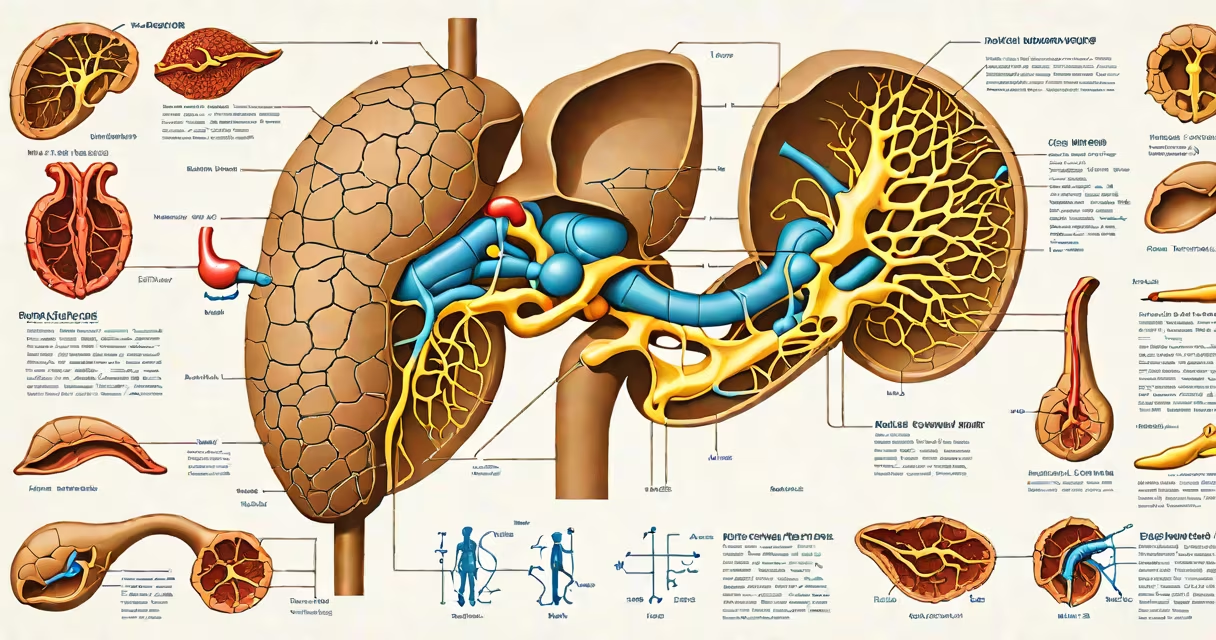
The gall bladder is a small, pear-shaped organ that stores and concentrates bile produced by the liver. This bile aids in digesting fats in the small intestine.
The liver continuously produces bile, which flows into the gall bladder via the hepatic ducts. When food enters the small intestine, particularly fatty foods, the gall bladder contracts and releases stored bile into the duodenum through the cystic duct and common bile duct.
The gall bladder consists of several layers: the mucosa, muscular layer, perimuscular connective tissue, and serosa. While it has no known subtypes, its function varies slightly based on individual diet and health.
The gall bladder is located beneath the liver, connected via bile ducts. Its primary purpose is to store and concentrate bile, which helps emulsify fats, making them easier to digest and absorb. Without the gall bladder, bile flows directly from the liver into the small intestine, often diluting its effectiveness.
Many believe the gall bladder is essential for survival, but this is a myth. The liver can adapt to produce bile continuously, though digestion may be less efficient without stored bile. For instance, post-surgery patients often adjust their diets to lower fat intake temporarily.
Another misconception is that gall bladder issues always cause severe pain. While a gall bladder attack can be painful, some people experience mild or no symptoms until complications arise, such as inflammation or infection.
Consider a person who undergoes gall bladder removal due to gallstones. Initially, they may struggle with digesting fatty foods, but over time, their liver adjusts to produce bile continuously. They might need to avoid high-fat meals temporarily but can eventually return to a normal diet with minor adjustments.