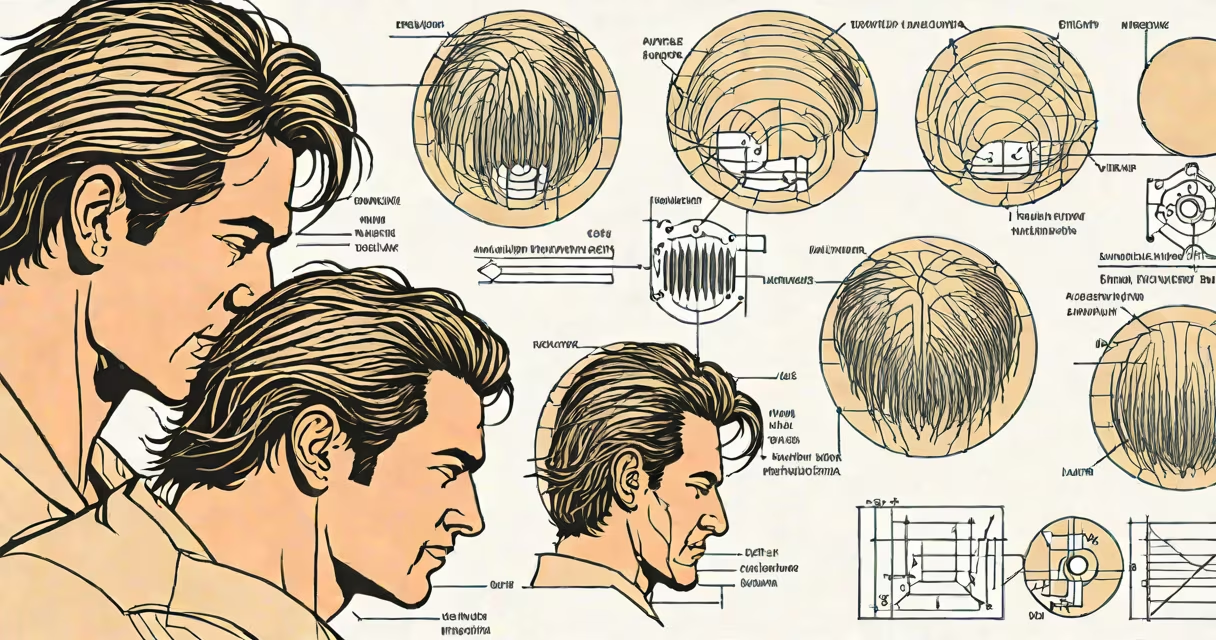
Hair breakage in men occurs when hair strands snap at weak points along the shaft, rather than falling out from the root. This happens due to damage or excessive stress on the hair fiber.
Unlike hair loss, which involves hair falling out from the follicle, hair breakage damages the hair shaft itself. The hair may appear thinner or uneven because the broken strands remain in place while new growth pushes through.
The most common causes of hair breakage in men include:
To minimize hair breakage, men should adopt gentle hair care habits. Using a wide-tooth comb on damp hair reduces tension, while avoiding tight hairstyles prevents unnecessary strain. Heat protectant sprays and limiting chemical treatments also help maintain hair integrity.
For existing breakage, deep conditioning treatments and hair masks can restore moisture and elasticity. Products containing keratin or amino acids help strengthen the hair shaft. In severe cases, consulting a dermatologist or trichologist can identify underlying issues like thyroid disorders (covered ).
Many believe hair breakage is solely genetic, but environmental and lifestyle factors play significant roles. Another myth is that frequent trims cause breakage; in reality, regular trims remove split ends, preventing further damage.
I've seen firsthand how switching to sulfate-free shampoos and using silk pillowcases reduced breakage in clients. These small changes made a noticeable difference in hair strength and appearance within weeks.
If breakage persists despite proper care, underlying health conditions or hormonal imbalances may be the cause. A healthcare provider can recommend treatments or supplements to address these issues. For localized breakage, such as at the back of the head (more on this), targeted solutions may be necessary.
Hair breakage in men results from various factors, including mechanical damage, heat styling, and nutritional deficiencies. Preventive measures like gentle handling, heat protection, and deep conditioning can reduce breakage. If breakage continues, consulting a professional may reveal deeper issues requiring specialized treatment.