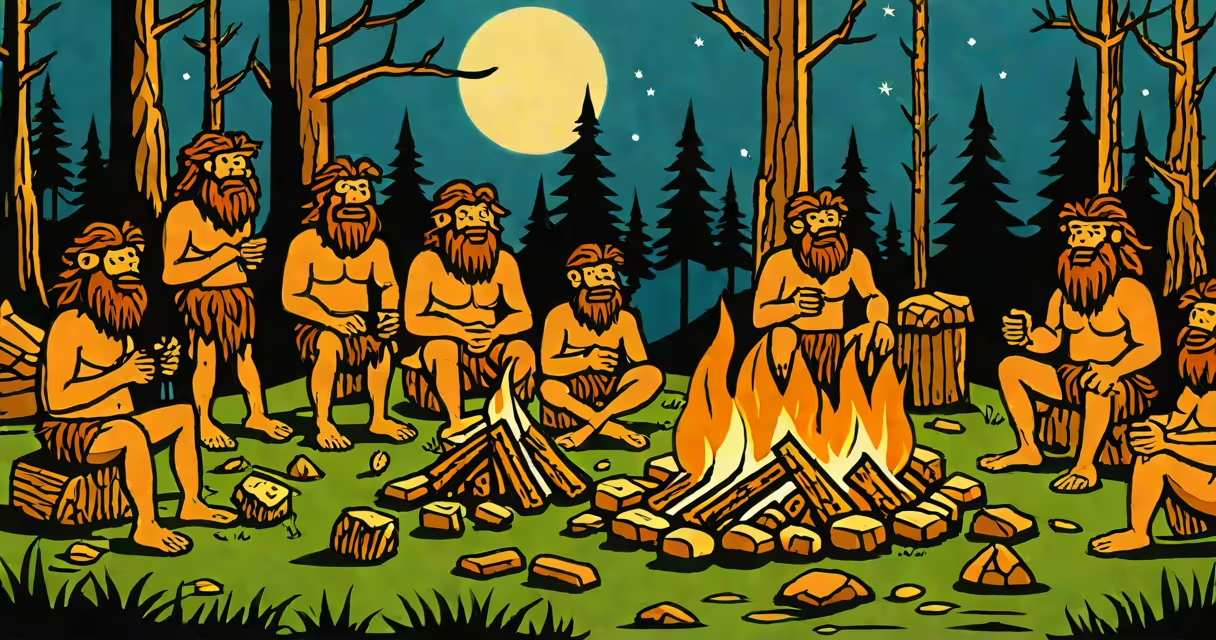
A happy caveman campfire is a gathering spot where prehistoric humans bonded through shared warmth, food, and stories, fostering emotional well-being and community. This ritual played a important role in early human survival and social structure.
The campfire served multiple purposes: cooking food, providing warmth, and acting as a central hub for social interaction. The fire's light and heat created a safe space where early humans could relax after a day of hunting or gathering. The flickering flames stimulated conversation, storytelling, and even early forms of art, such as cave paintings inspired by the dance of light and shadow.
Campfires were the heart of several key activities:
Campfires were used worldwide, from the icy tundras of Europe to the savannas of Africa. They were essential for survival in harsh environments, providing warmth and protection from predators. Beyond practical uses, campfires were a key part of social life, helping to build trust and cooperation within groups. Archaeological evidence shows that controlled use of fire dates back at least 1 million years, with significant increases in complexity around 400,000 years ago.
Many people assume that prehistoric life was solely about survival, but campfires reveal a deeper story. They were not just tools for cooking or warmth; they were centers of culture, creativity, and emotional connection. For example, the discovery of hearths in ancient sites suggests that early humans valued comfort and social interaction as much as survival.
Another misconception is that campfires were always large and dramatic. In reality, many were small, contained fires used for specific tasks. The size and purpose varied depending on the group's needs and available resources.
While I haven't lived as a caveman, I've experienced the power of a campfire firsthand. During a backpacking trip, my group gathered around a small fire each evening. The warmth, shared meals, and stories created a sense of camaraderie that mirrored the bonds formed by our ancient ancestors. It was a reminder of how fundamental these experiences are to human nature.
The happy caveman campfire was more than just a source of light and heat; it was a important part of early human life, fostering community, creativity, and emotional well-being. Understanding this tradition offers valuable insights into the timeless human need for connection and shared experiences.