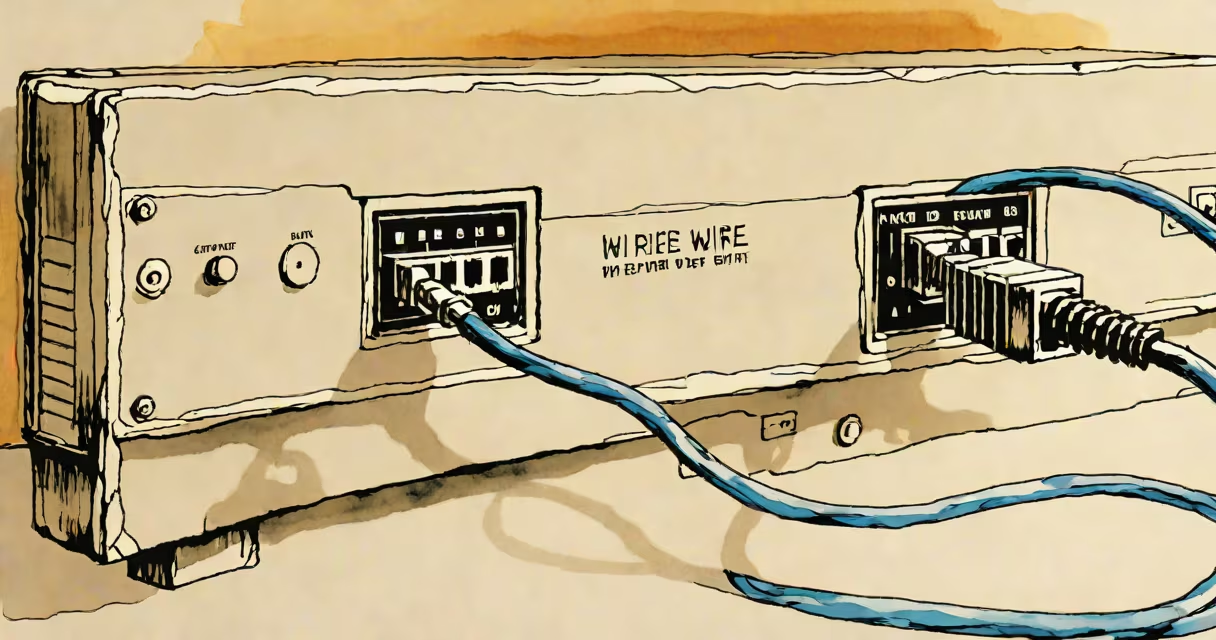
Hard wiring wifi means connecting devices directly to your router using Ethernet cables instead of relying on wireless signals. This setup provides faster speeds, lower latency, and better reliability compared to Wi-Fi.
When you hard wire a device, it communicates with your router through a physical cable rather than radio waves. Data travels digitally along copper wires inside the Ethernet cable, bypassing potential interference from walls, other devices, or electromagnetic noise that can degrade Wi-Fi performance.
Not all Ethernet cables are the same. The most common types include:
| Category | Max Speed | Typical Use |
|---|---|---|
| Cat 5 | 100 Mbps | Older networks, basic internet |
| Cat 5e | 1 Gbps | Most homes, standard internet |
| Cat 6 | 10 Gbps (short distances) | Gaming, streaming, smart homes |
| Cat 6a | 10 Gbps (long distances) | Businesses, high-bandwidth needs |
| Cat 7 | 10 Gbps | Data centers, future-proofing |
Wi-Fi is convenient, but hard wiring offers several advantages:
Some people assume that Wi-Fi is always sufficient, but this isn't true for high-performance applications. For example, a wired connection can handle a 4K stream without buffering, while Wi-Fi might struggle during peak usage times., many believe that running long Ethernet cables degrades performance, but modern cables maintain signal integrity over considerable distances.
To hard wire your devices, you'll need:
Plug one end of the Ethernet cable into your router and the other into your device. Most modern routers have multiple ports, allowing you to connect several devices simultaneously.
I once set up a hard-wired network for a friend's home office. By connecting their computer, printer, and smart TV directly to the router, we eliminated Wi-Fi dead zones and improved performance. The difference was noticeable immediately-faster file transfers, smoother video calls, and no more buffering during streaming.
While hard wiring is superior for performance, Wi-Fi remains essential for mobile devices like smartphones and tablets. It's also more practical for devices without Ethernet ports, such as smart speakers or security cameras. Many homes use a hybrid approach, hard wiring stationary devices and relying on Wi-Fi for everything else.
According to the Federal Communications Commission, wired connections are still the gold standard for reliability and speed. However, advancements in Wi-Fi technology, such as Wi-Fi 6, are narrowing the gap. Still, for critical applications, hard wiring remains the best choice.