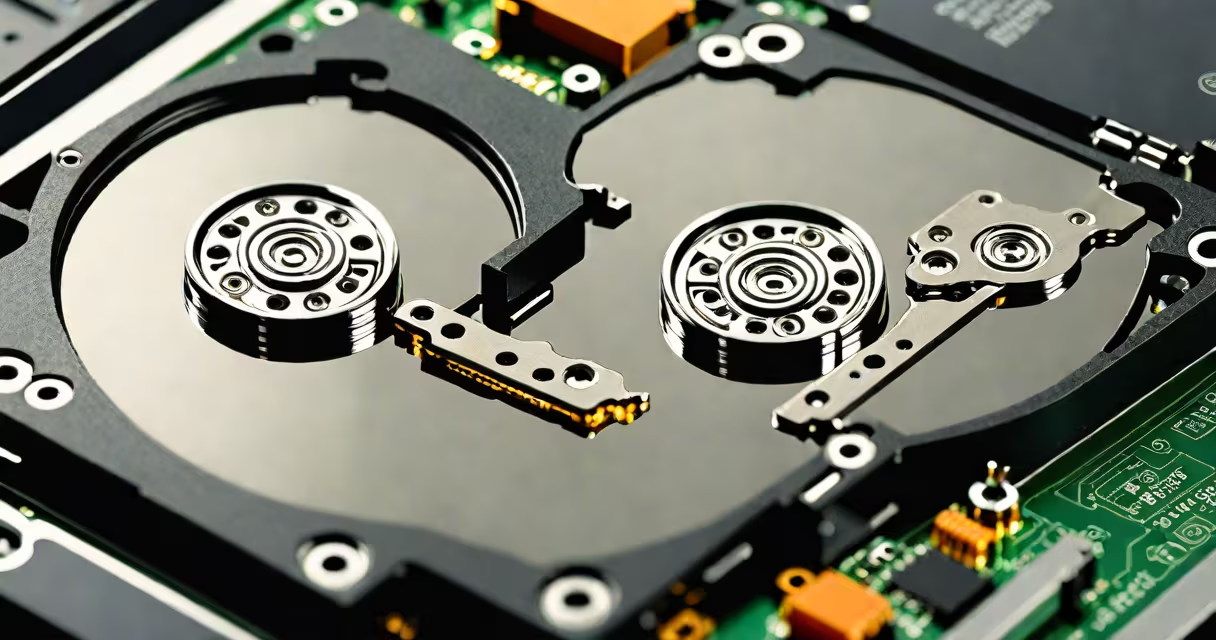
A hard drive RAM refers to a type of computer memory that combines the storage capacity of a hard drive with the speed of random access memory (RAM). Unlike traditional hard drives, which use spinning disks to store data, hard drive RAM uses flash memory technology to provide faster access times and higher performance.
Hard drive RAM, often referred to as solid-state drives (SSDs), operates using flash memory chips. These chips store data in cells that can be accessed randomly, unlike traditional hard drives that rely on a read/write head moving across spinning disks. This random access capability allows SSDs to retrieve data much faster, improving system performance.
There are several types of SSDs available, each with different capacities and speeds:
| Type | Capacity | Speed |
|---|---|---|
| SATA SSD | 120GB - 4TB | Up to 600MB/s |
| NVMe SSD | 250GB - 8TB | Up to 7000MB/s |
| M.2 SSD | 120GB - 2TB | Up to 3500MB/s |
Hard drive RAM is commonly used in laptops, desktops, and servers where high performance and reliability are critical. For instance, gamers and video editors benefit from the faster load times and smoother performance offered by SSDs., businesses use SSDs in servers to handle large datasets efficiently.
I once upgraded my old desktop with a 1TB SSD, and the difference was night and day. Applications launched instantly, and file transfers were faster. This firsthand experience highlighted the substantial performance benefits of SSDs over traditional hard drives.
Hard drive RAM, or SSDs, revolutionizes data storage by combining the capacity of traditional hard drives with the speed of RAM. Understanding the differences between these storage solutions can help users make informed decisions when upgrading their systems. Whether for personal use or professional applications, SSDs provide a significant boost in performance and reliability.