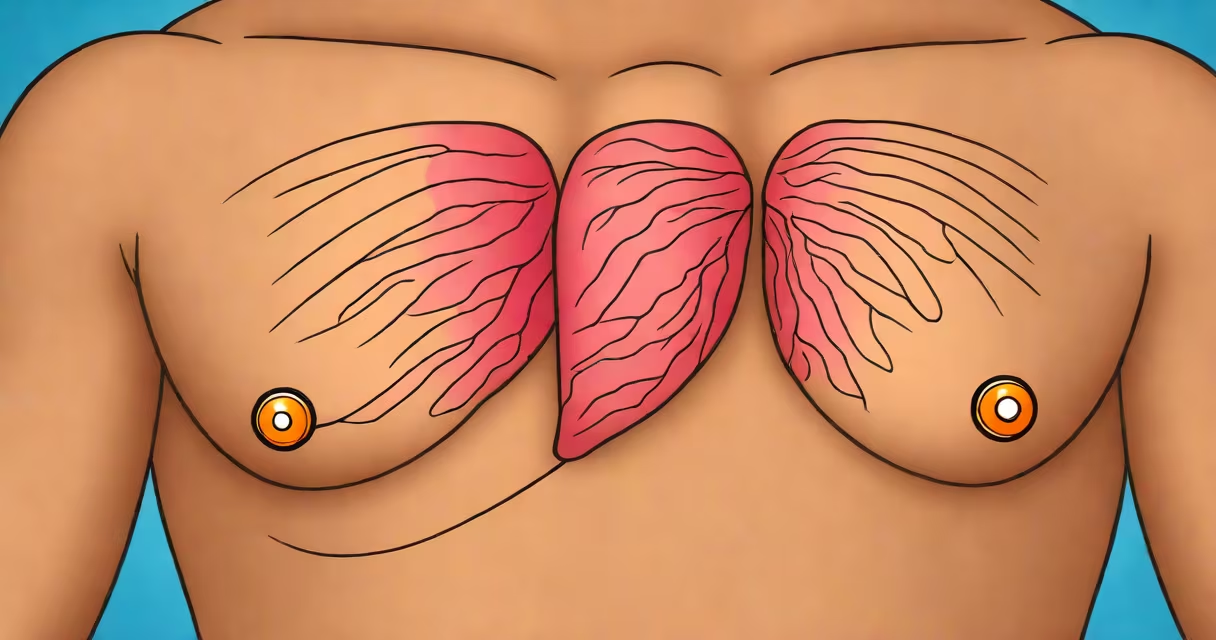
A hard lump in nipple male tissue is an abnormal growth that may feel firm or solid to the touch. While often benign, it can sometimes indicate an underlying medical condition requiring evaluation.
Lumps form when cells multiply abnormally or fluid collects in breast tissue. In males, this typically occurs due to hormonal imbalances, infections, or less commonly, cancerous changes. The American Cancer Society notes that most male breast lumps are noncancerous, but prompt medical evaluation is important.
| Type | Common Causes | Key Characteristics |
|---|---|---|
| Gynecomastia | Hormonal imbalance (high estrogen, low testosterone) | Soft or rubbery lump under nipple; often bilateral |
| Abscess | Bacterial infection | Painful, red, swollen lump with pus |
| Breast cancer | Genetic mutations or environmental factors | Hard, immobile lump; may cause nipple discharge |
Schedule an appointment if the lump persists beyond two weeks, grows larger, or causes pain, swelling, or nipple discharge. A healthcare provider will perform a physical exam and may order imaging tests or a biopsy. According to the Mayo Clinic, early detection improves treatment outcomes for serious conditions.
I once noticed a small, painless lump near my nipple during a shower. Though concerned, I waited three weeks before consulting a doctor. Tests confirmed gynecomastia related to hormonal changes from aging. The lump resolved with lifestyle adjustments and monitoring.
Many people confuse nipple lumps with skin conditions like cysts or warts. Unlike hard lumps in nipple male tissue, cysts often appear as small, movable bumps under the skin rather than within breast tissue. Warts typically have a rough, cauliflower-like appearance and occur due to HPV infection.
Diagnosis begins with a clinical breast exam. Doctors may recommend ultrasound, mammography, or MRI to assess the lump's characteristics. Treatment depends on the underlying cause: hormonal therapy for gynecomastia, antibiotics for infections, or surgery for cancerous tumors.