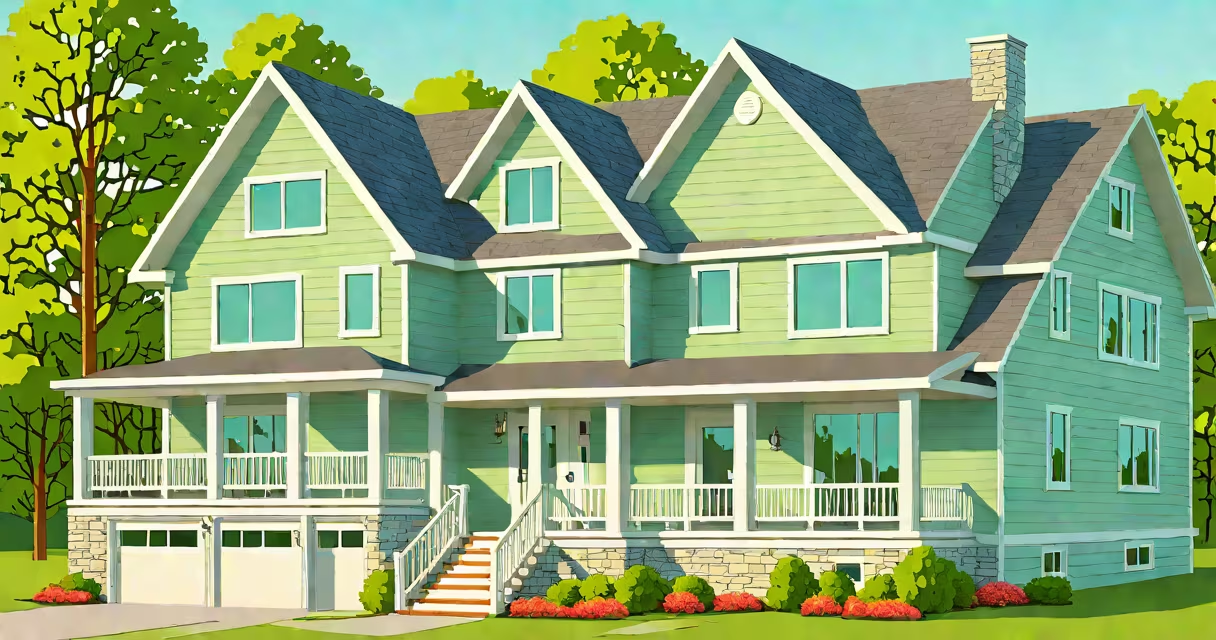
Hardie board siding is a type of fiber cement siding made from wood pulp, sand, and Portland cement. It's designed to mimic the look of wood or stucco while offering superior durability and resistance to fire, rot, and pests.
Fiber cement siding, like Hardie board, resists warping, cracking, and splitting better than traditional wood siding. The material is pre-primed, allowing homeowners to paint it in any color. Over time, it maintains its shape and appearance with minimal upkeep.
Hardie board comes in several styles:
Homeowners choose Hardie board for its longevity and low maintenance. Unlike wood, it doesn't require frequent painting or sealing. It's also termite-resistant and fireproof, making it a safer choice for homes in high-risk areas.
A common misconception is that fiber cement siding is brittle. While it's heavier than vinyl, proper handling during installation prevents cracking. For example, a homeowner in Florida replaced rotting wood siding with Hardie board, eliminating maintenance issues for over a decade.
Professional installation is recommended due to the material's weight and the need for precise cuts. Improper installation can lead to water damage or mold growth. The average cost ranges from $5 to $10 per square foot, including labor.
According to James Hardie, the leading manufacturer, Hardie board siding carries a 30-year warranty against defects. However, paint warranties may vary based on the type of paint used.
Many homeowners confuse Hardie board with vinyl siding, which lacks the same durability. Vinyl is lighter and cheaper but prone to fading and cracking in extreme weather. Hardie board's fiber cement composition makes it far more resilient.
Another mistake is assuming all fiber cement siding is the same. Some brands lack the same quality control as James Hardie, leading to inconsistent performance. Always verify the product's specifications before purchasing.