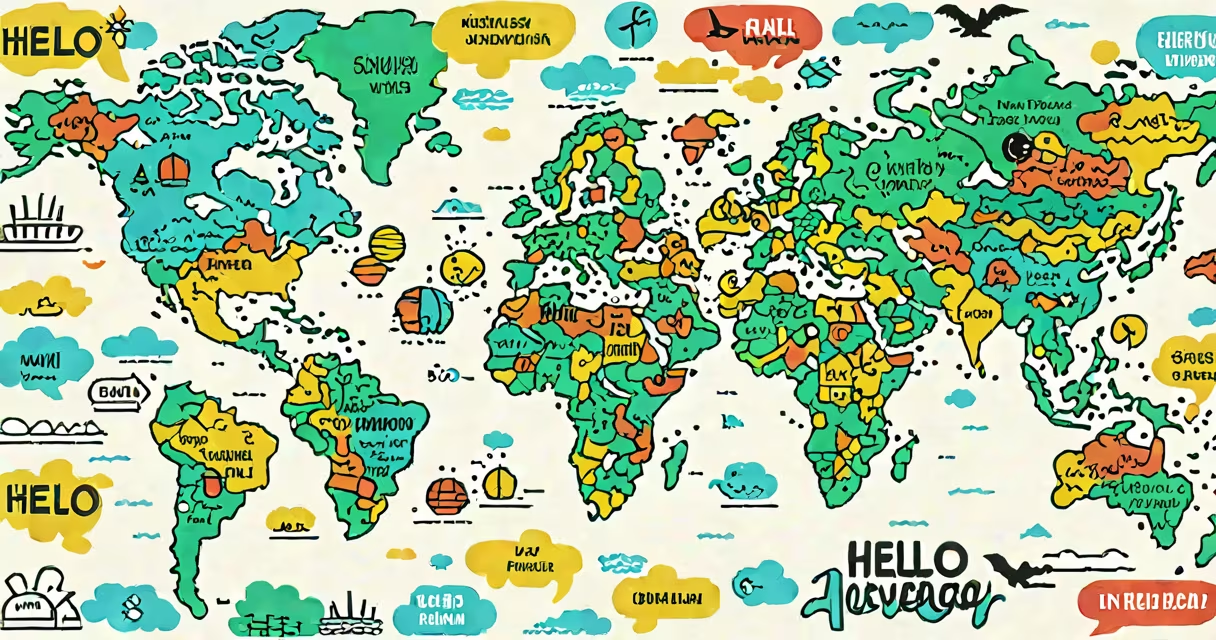
"Hello in every language" refers to the various ways people greet each other around the world, reflecting linguistic and cultural diversity. These greetings often include verbal phrases, gestures, or physical contact.
Most cultures have specific greetings for different contexts: formal, informal, or between friends. Some languages use separate words for "hello" and "hi," while others combine them. Many greetings incorporate questions about health, family, or recent events.
Greetings typically fall into these categories:
| Language | Greeting | Pronunciation |
|---|---|---|
| Spanish | Hola | OH-lah |
| French | Bonjour | BON-zhoor |
| German | Hallo | HAH-loh |
| Japanese | Konnichiwa | koh-nee-chee-wah |
| Arabic | Marhaba | mar-HAH-bah |
Many assume all greetings translate directly to "hello," but this isn't always true. The Russian "Privet" (pree-VYET) literally means "hello," but "Zdravstvuyte" (zdrast-VOOY-teh) means "good health." Some languages use different greetings based on time of day, like Spanish's "buenos días" (morning) or "buenas tardes" (afternoon).
When traveling, learning basic greetings shows respect and can lead to warmer interactions. I once visited a small village in Mexico where saying "buenos días" to shopkeepers resulted in friendlier service and even free samples. Locals appreciated the effort, even if my pronunciation wasn't perfect.
Understanding how to say "hello" in different languages fosters connection and demonstrates cultural awareness. Whether for travel, business, or personal growth, mastering these greetings opens doors to meaningful interactions worldwide.