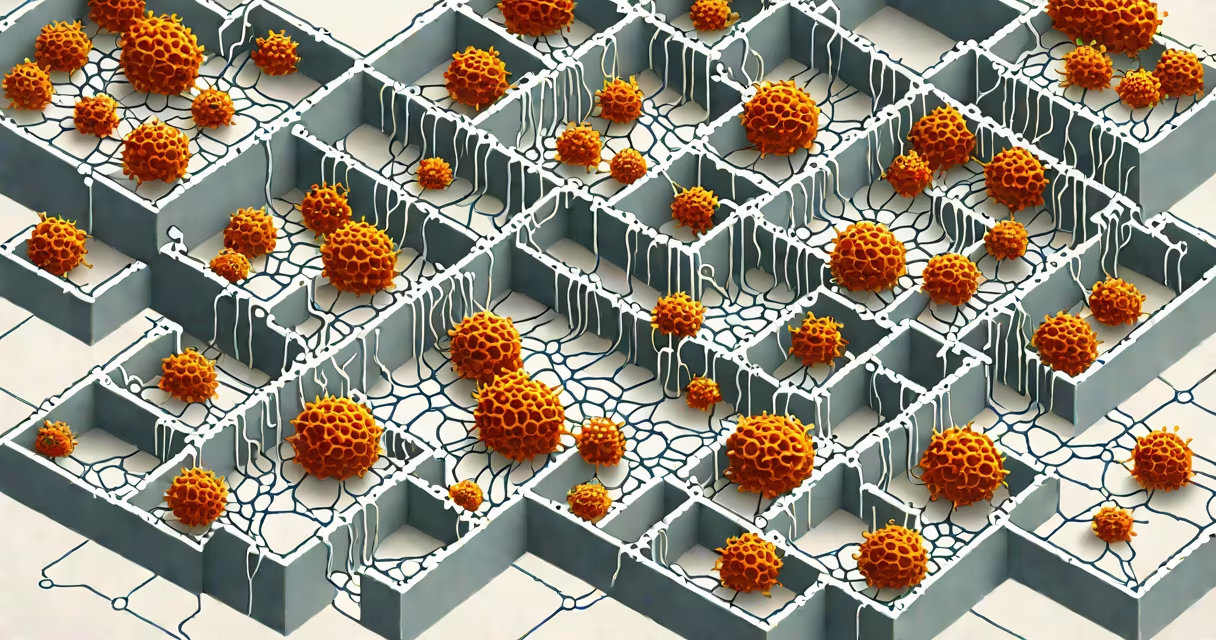
The HeLa cell line consists of immortalized human cells originally derived from cervical cancer cells taken from Henrietta Lacks in 1951. These cells were the first human cells successfully cloned and remain widely used in scientific research.
HeLa cells grow rapidly and indefinitely in laboratory conditions, unlike most normal cells that die after a limited number of divisions. This immortality makes them ideal for studying cell biology, cancer, and infectious diseases. Scientists can freeze and thaw HeLa cells repeatedly without losing viability.
While all HeLa cells originate from Henrietta Lacks' tumor, they have evolved into various sublines over time. Some key types include:
HeLa cells are used in laboratories worldwide for various purposes. They played a important role in developing the polio vaccine and continue to aid in cancer research, gene mapping, and HIV studies. Their widespread use stems from their robustness and adaptability to different experimental conditions.
Many people confuse HeLa cells with other immortalized cell lines or assume they are all identical. However, HeLa cells have undergone genetic changes over decades of propagation, leading to significant variations among different sublines., some believe HeLa cells are only useful for cancer research, but they are also important for studying viral infections and genetic disorders.
One non-obvious fact is that HeLa cells have their own chromosome abnormalities, including extra copies of certain chromosomes and rearranged DNA segments. These changes contribute to their immortality but also make them different from normal human cells.
In 2020, researchers used HeLa cells to study the effects of a new antiviral drug on SARS-CoV-2, the virus causing COVID-19. They infected HeLa cells with the virus and then treated them with the drug. By observing how the cells responded, they could assess the drug's efficacy and safety. This work helped advance understanding of potential treatments for COVID-19.
I once observed HeLa cells under a microscope during a laboratory visit. The cells appeared as a dense layer of irregularly shaped structures, constantly dividing and moving. It was fascinating to see firsthand the cells that have contributed so much to medical research.
| Feature | HeLa Cells | Other Immortalized Cell Lines |
|---|---|---|
| Origin | Cervical cancer cells | Various tissues and cancers |
| Growth Rate | Very fast | Varies by cell line |
| Genetic Stability | Low (many mutations) | Varies by cell line |
| Common Uses | Cancer research, virology, drug testing | Depends on the specific cell line |
The use of HeLa cells raises ethical questions about consent and patient rights. Henrietta Lacks did not give explicit permission for her cells to be used in research. This has led to discussions about the importance of informed consent in medical research and the rights of patients whose tissues are used for scientific purposes.
The HeLa cell line has been instrumental in advancing medical research for over seven decades. Its immortality and versatility make it a valuable tool for studying various diseases and developing new treatments. Understanding the origins, uses, and ethical considerations of HeLa cells is essential for anyone interested in the history and future of biomedical research.