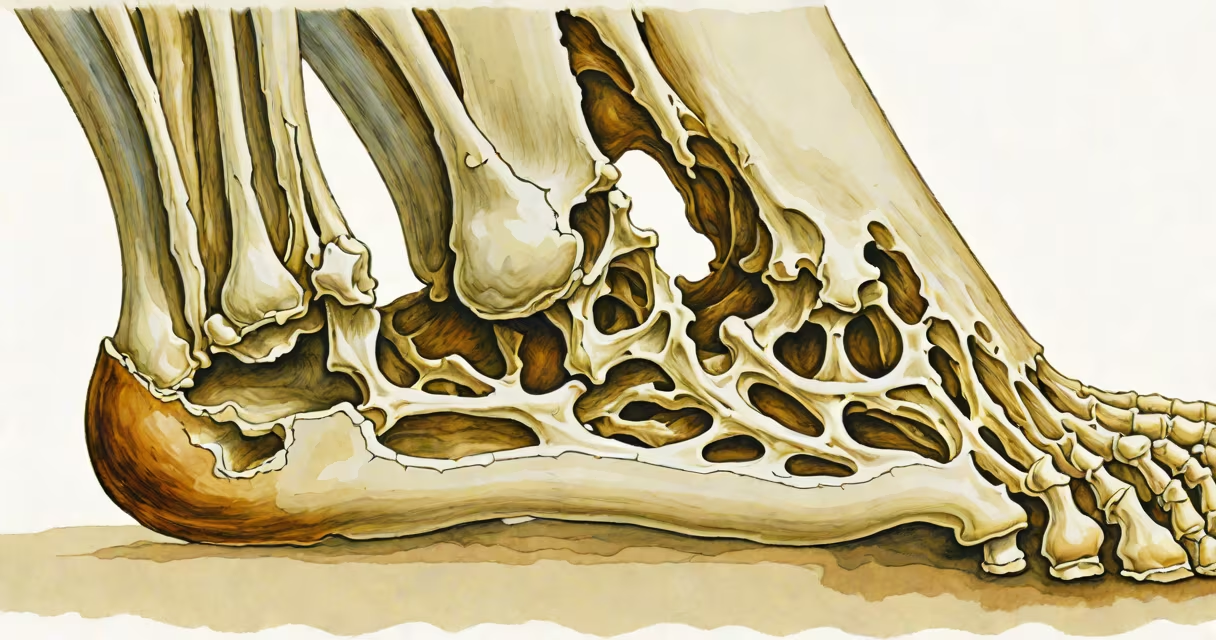
A swollen heel bone indicates inflammation or injury to the calcaneus, the large bone forming your heel. This swelling often accompanies pain, redness, or warmth. Causes range from overuse injuries to systemic conditions.
The calcaneus supports your foot's arch and absorbs shock during movement. When swollen, it typically results from trauma, inflammation, or underlying medical conditions. The body responds by increasing blood flow to the area, causing visible swelling and discomfort.
Common reasons for a swollen heel bone include:
Swelling rarely occurs alone. Other symptoms include:
If swelling persists beyond a few days or worsens suddenly, consult a doctor. Untreated swelling can lead to chronic issues like swollen cuboid bone or other foot deformities.
Doctors diagnose swollen heel bones through physical exams and imaging tests like X-rays or MRIs. Treatments vary based on the cause:
| Cause | Treatment |
|---|---|
| Plantar fasciitis | Rest, ice, stretching, and orthotic inserts |
| Achilles tendinitis | Physical therapy, anti-inflammatory medications |
| Fractures | Immobilization with a cast or boot |
| Arthritis | Medications, lifestyle changes, or surgery in severe cases |
For example, a runner with plantar fasciitis might need custom orthotics and a gradual return to activity. A fracture requires immediate medical attention to prevent long-term damage.
Seek medical care if:
Ignoring persistent swelling risks complications like chronic pain or reduced mobility. Early intervention often leads to better outcomes.
To reduce the risk of swollen heel bones:
Many assume heel swelling always results from overuse. However, systemic conditions like rheumatoid arthritis or infections can also cause it., swelling in adjacent bones, such as the accessory navicular bone, may mimic heel bone issues.
I once treated a patient who believed their heel swelling was due to aging. After tests, we discovered an undiagnosed case of gout. Proper treatment resolved the issue within weeks.