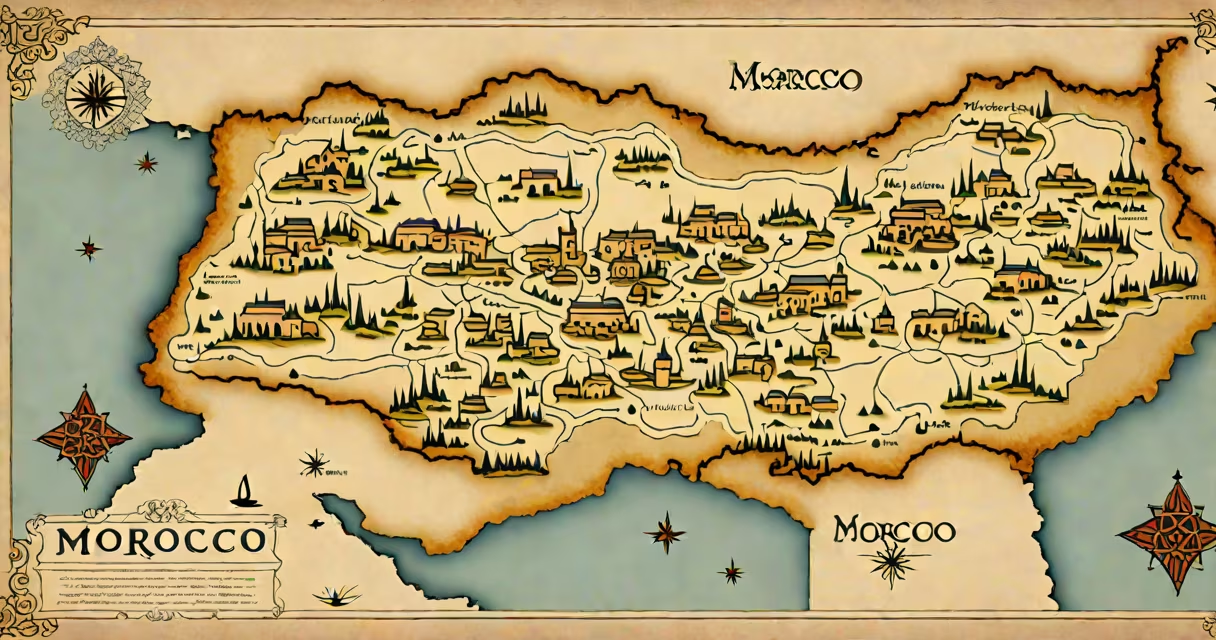
The history of Morocco traces the development of a North African nation from prehistoric Berber settlements to a modern constitutional monarchy, shaped by Arab, European, and indigenous influences.
Morocco's earliest inhabitants were the Berbers, who arrived around 2000 BCE. By the 6th century BCE, Phoenicians established trading posts along the coast. Carthage and later Rome controlled parts of the region until the 3rd century CE.
The arrival of Arab conquerors in the 7th century introduced Islam and Arabic language. The Idrisid dynasty, founded in 789 CE, became Morocco's first permanent state. They established Fez, which remains a cultural and religious center.
Morocco's history includes several major dynasties:
| Dynasty | Period | Key Contributions |
|---|---|---|
| Idrisid | 789-974 CE | Founded Fez, spread Islam |
| Almoravid | 1040-1147 CE | Expanded territory, built Marrakech |
| Almohad | 1147-1269 CE | Architectural achievements, including the Koutoubia Mosque |
| Saadi | 1549-1659 CE | Defeated Portuguese at Battle of Three Kings (1578) |
| Alawi | 1666-present | Current ruling dynasty, established modern Morocco |
Beginning in the 15th century, European powers sought control of Morocco's strategic ports. Spain and Portugal established coastal enclaves, while France gained influence through economic treaties.
In 1912, Morocco became a French protectorate, with Spain controlling northern and southern zones. The colonial period brought infrastructure development but also resistance movements. The Istiqlal Party, formed in 1944, became a leading force for independence.
Morocco gained independence on November 18, 1955. King Mohammed V returned from exile and began rebuilding the nation. His son, Hassan II, ruled from 1961-1999, facing challenges from regional conflicts and political opposition.
Current king Mohammed VI, who ascended the throne in 1999, has implemented democratic reforms, including new constitutions in 2011 and 2023. These changes expanded parliamentary powers and protected human rights, though political tensions remain.
Many associate Morocco primarily with its Arab heritage, overlooking the significant Berber (Amazigh) contributions. The Amazigh population makes up about 40% of Morocco's people and maintains distinct languages and traditions.
Another common misconception is that Morocco's history is isolated from global influences. In reality, it has long been a crossroads for trade, migration, and cultural exchange between Africa, Europe, and the Middle East.
I visited the ancient Roman ruins of Volubilis near Meknes, which demonstrate Morocco's historical connections to Mediterranean civilizations. The site's well-preserved mosaics and triumphal arch showcase Roman architectural techniques adapted to local materials.
The history of Morocco reflects a complex interplay of indigenous, Arab, European, and African influences. From ancient Berber kingdoms to modern political developments, Morocco's past continues shaping its cultural identity and international relations.