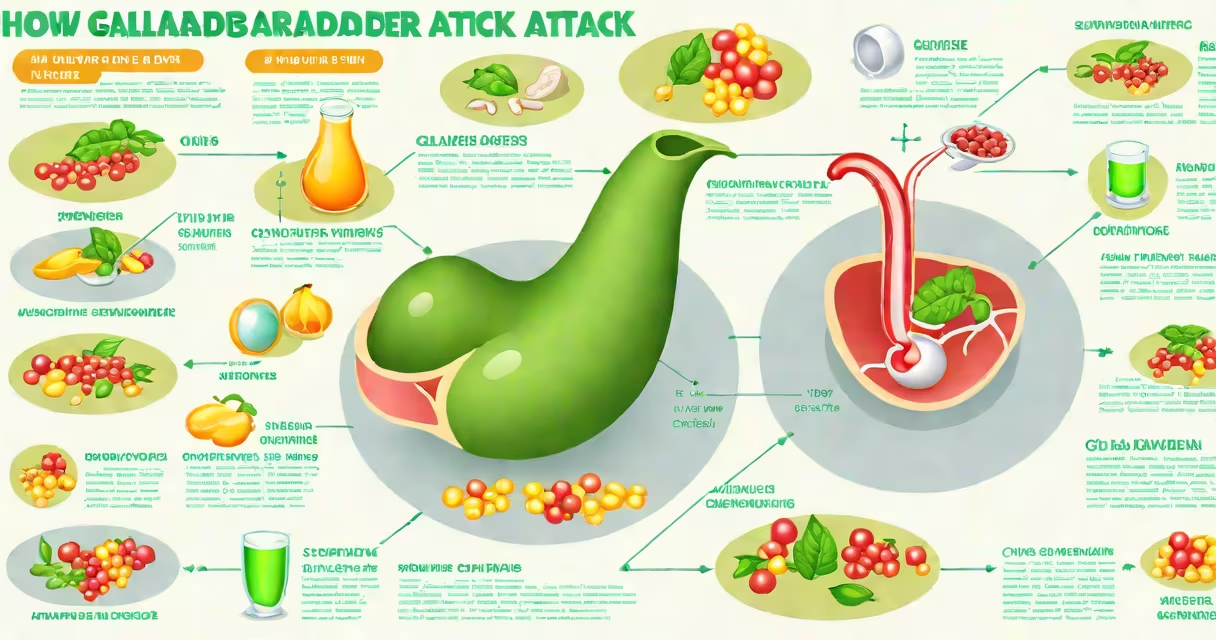
A gallbladder attack begins with sudden, intense pain in the upper right abdomen, often triggered by eating fatty foods. This pain results from bile buildup due to gallstones blocking the bile duct.
The attack starts when a gallstone temporarily blocks the cystic duct, which carries bile out of the gallbladder. Bile, a digestive fluid, then backs up, causing pressure and inflammation. The pain typically peaks within 30 minutes and can last several hours.
| Type | Cause | Duration |
|---|---|---|
| Biliary colic | Gallstone temporarily blocking duct | 1-5 hours |
| Acute cholecystitis | Gallstone causing infection/inflammation | Days, possibly requiring surgery |
Fatty or greasy foods are the most frequent triggers, but spicy foods, fried foods, and large meals can also provoke attacks. Stress and rapid weight loss may contribute as well.
Seek help if pain lasts longer than six hours, spreads to the shoulder, or is accompanied by fever, nausea, or jaundice (yellow skin/eyes). These may indicate acute cholecystitis or pancreatitis, requiring urgent treatment.
According to the National Institute of Diabetes and Digestive and Kidney Diseases, gallstones affect about 12% of adults in the U.S., with women and older adults at higher risk. Most attacks resolve without intervention, but recurrent episodes often lead to gallbladder removal surgery.
I once witnessed a colleague experience sudden upper abdominal pain after a high-fat lunch. They described it as the worst pain they'd ever felt, confirming how severe these attacks can be. Understanding the onset helps in recognizing when to act.
Maintain a low-fat diet, exercise regularly, and manage weight to reduce gallstone formation. Small, frequent meals may help prevent bile stasis. For those with recurring attacks, surgical removal of the gallbladder is often recommended.