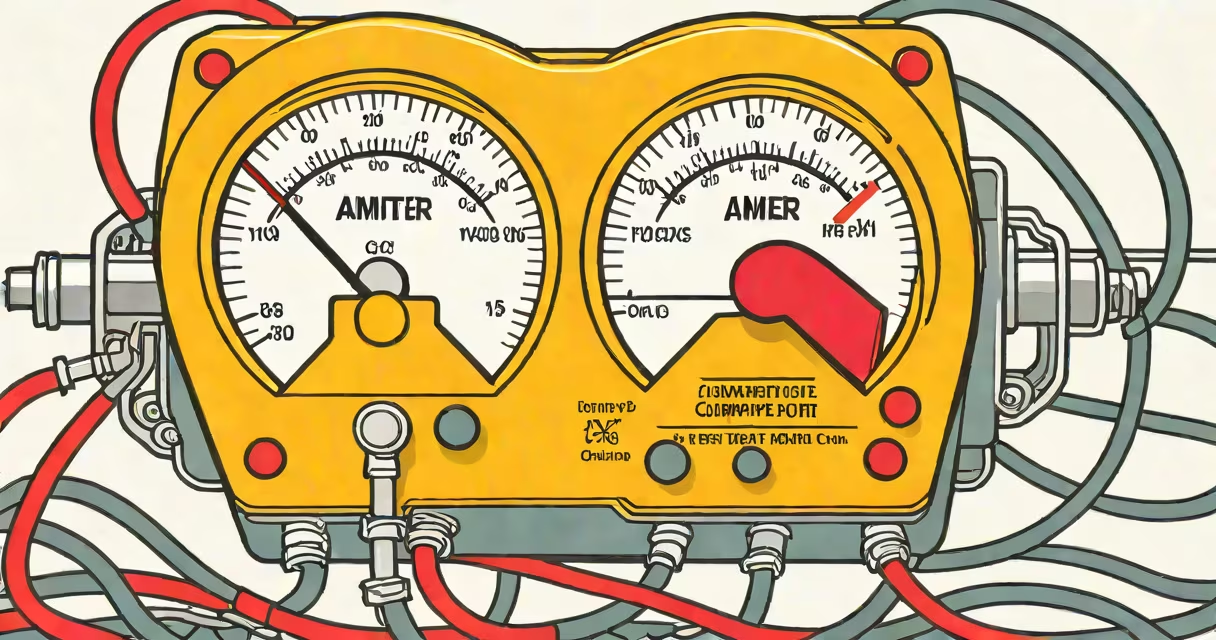
A clamp-on ammeter measures electrical current without disconnecting wires by clamping around a conductor and using a current transformer to induce a proportional voltage. This allows technicians to measure AC or DC current safely while circuits remain energized.
The device consists of a jaw that opens to clamp around a wire and an analog or digital display. When clamped, the conductor creates a magnetic field that induces a small current in the ammeter's internal transformer. This current flows through a resistor, generating a voltage proportional to the current in the measured wire. The ammeter then displays this value.
| Type | Key Feature | Common Use Case |
|---|---|---|
| AC-only | Measures alternating current only | Residential wiring checks |
| DC/AC | Measures both types of current | Automotive and industrial applications |
| True RMS | Accurate for distorted waveforms | Variable frequency drives and motor testing |
Many assume clamp meters only work on exposed wires, but they function equally well on insulated conductors. However, they cannot measure current through multiple wires simultaneously unless the wires are bundled together. For complex setups, technicians must isolate individual conductors.
Another myth is that clamp meters are always accurate for DC current. While advanced models handle DC, basic AC-only versions cannot measure direct current at all. Always check the specifications before use.
Never clamp around high-voltage lines or equipment exceeding the meter's rating. Even low-voltage DC systems can produce dangerous arcs if the jaws are opened near live conductors. Always follow manufacturer guidelines for safe operation.
During a recent site visit, I observed a technician using a clamp meter to diagnose a flickering light issue. By clamping around the circuit's hot wire, he identified excessive current draw from a faulty fixture-all without turning off the breaker. This saved time and prevented potential fire hazards.
Clamp-on ammeters simplify electrical diagnostics by providing safe, non-contact current measurements. Whether checking residential wiring or industrial machinery, their versatility makes them essential for electricians. Always verify the meter's type and rating before use to ensure accurate readings and safety.