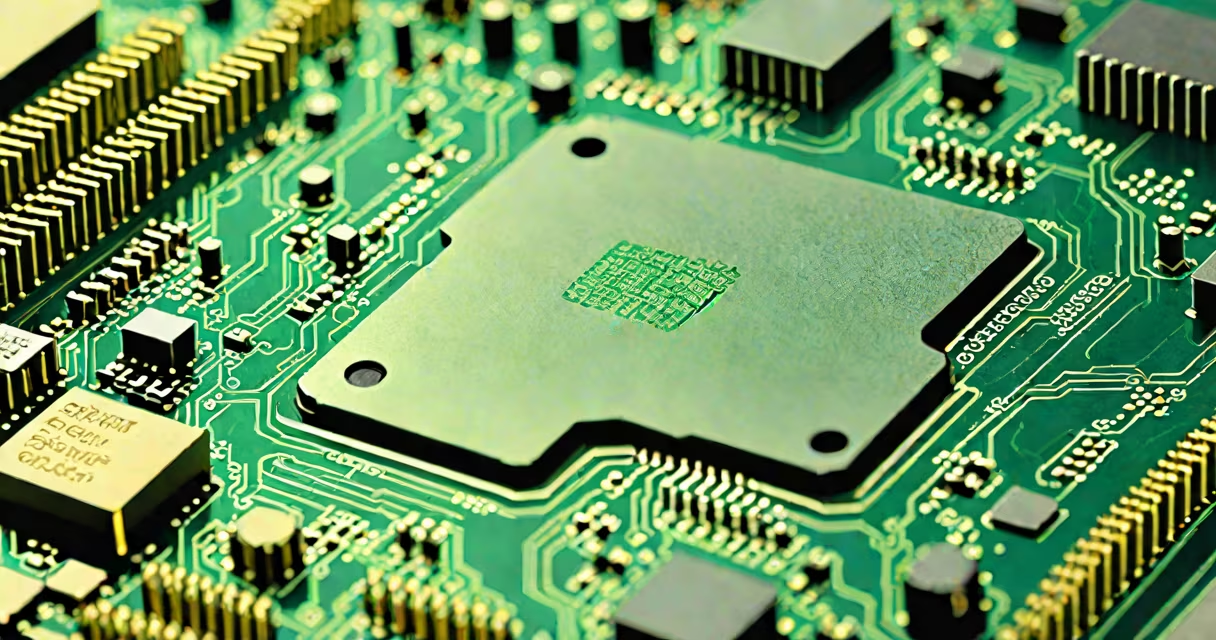
A CPU (central processing unit) executes instructions by fetching data, decoding operations, and performing calculations using arithmetic logic units and control units. This cycle repeats billions of times per second.
Every computation follows four steps:
Modern CPUs handle about 1 billion cycles per second.
All CPUs contain these essential parts:
For example, Intel's Core i9-13900K has 24 cores, each with dedicated ALUs and caches.
Consider adding two numbers:
ADD R1, R2, R3
This means "Add contents of register R2 to R3, store result in R1". The CPU:
This entire sequence takes about 0.3 nanoseconds on a 3GHz processor.
Many people confuse CPUs with:
| Misconception | Reality |
|---|---|
| CPU = Computer Memory | Memory stores data; CPU processes it |
| More cores = Always faster | Specialized workloads benefit most |
| CPU speed = Clock speed | Modern CPUs use sophisticated pipelining |
For instance, Apple's M1 chip uses an 8-core CPU with shared memory architecture, proving that core count isn't everything.
When you open a web browser:
My 2018 MacBook Pro's quad-core i7 handles this in about 1.2 seconds for complex sites.