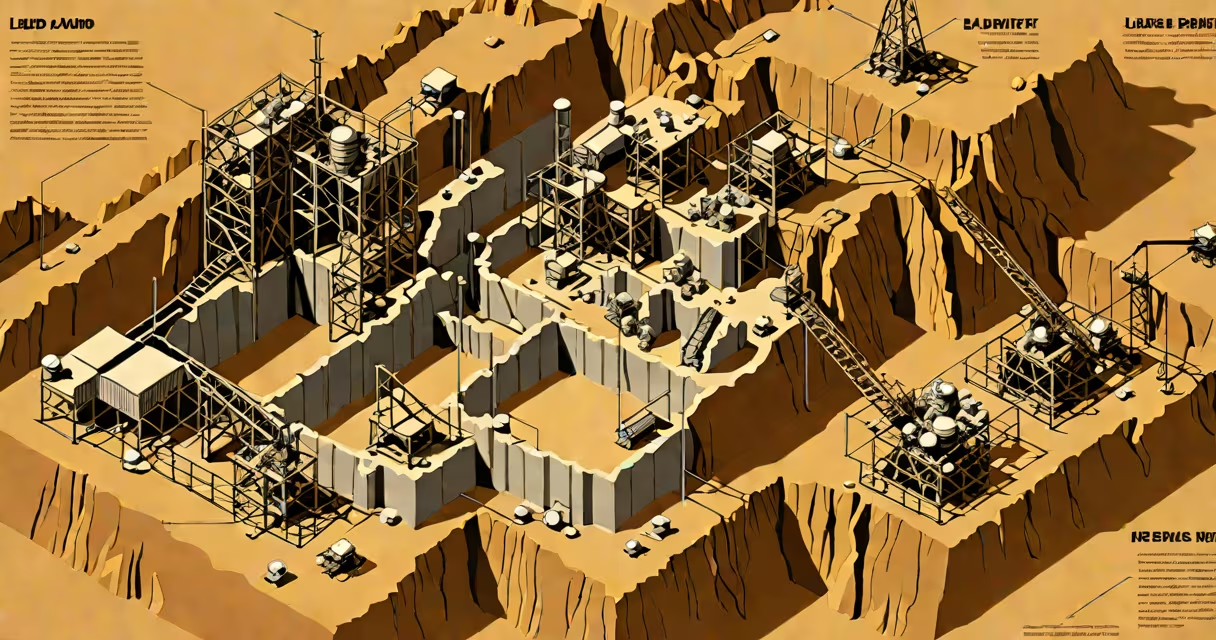
Lead mining involves extracting lead from ores, primarily galena (PbS), through surface or underground mining, followed by crushing, grinding, and flotation to separate lead minerals from waste rock.
Lead mining begins with prospecting to locate lead deposits. Once identified, mining operations extract the ore using two primary methods: surface mining (open-pit or strip mining) for shallow deposits, and underground mining for deeper ones. Surface mining involves removing topsoil and rock to access the ore, while underground mining uses tunnels and shafts.
The most common lead ore is galena, which contains about 86% lead. Other lead-bearing minerals include cerussite (PbCO₃) and anglesite (PbSO₄). These ores often contain trace amounts of other metals like silver, zinc, and copper.
After extraction, the ore undergoes several processing stages:
Lead mining can have significant environmental impacts, including soil and water contamination from lead and other heavy metals. According to the U.S. Environmental Protection Agency (EPA), proper management of mine waste and water treatment are important to minimize these risks. Workers in lead mines must follow strict safety protocols to avoid exposure to lead dust and fumes.
Many people confuse lead mining with the extraction of other metals like zinc or copper. While these metals may be present in lead ores, they require different processing techniques., lead mining is often misunderstood as a purely industrial process, but it also plays a role in historical preservation and manufacturing.
For example, lead was historically used in paints and gasoline, though its use has declined due to health concerns. Today, lead is primarily used in batteries, ammunition, and radiation shielding.