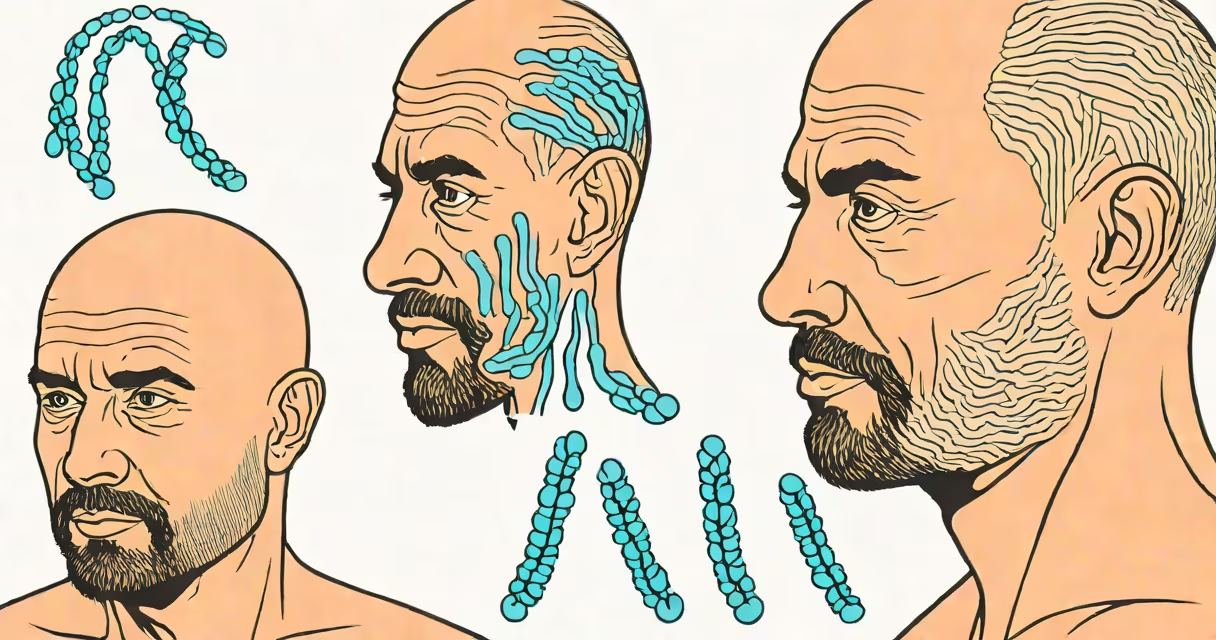
Male pattern baldness is primarily inherited through the AR gene on the X chromosome, with additional contributions from other genes and environmental factors.
The primary genetic factor is the androgen receptor (AR) gene on the X chromosome. This gene makes men more sensitive to dihydrotestosterone (DHT), which shrinks hair follicles. Other genes on chromosomes 1, 2, 5, and 20 also contribute.
Contrary to popular belief, baldness isn't determined by a single maternal gene. The X chromosome from either parent can carry the baldness-associated AR gene variant. However, since men inherit their X chromosome from their mothers, they're more likely to inherit baldness from this side.
The AR gene accounts for about 12% of male pattern baldness cases. Other contributing genes include:
Many believe baldness is strictly maternal. While the X chromosome plays a major role, other chromosomes contribute. The condition is polygenic, meaning multiple genes interact.
A study published in PLOS Genetics identified 287 genetic locations associated with severe hair loss. This shows the complexity of male pattern baldness inheritance.
Understanding inheritance patterns helps assess risk. For example, if a man's father is bald, his risk increases by 50%. If both parents have a history of baldness, the risk is even higher.
The inheritance pattern is complex. While the AR gene shows incomplete dominance, other contributing genes may be recessive. This means a man could inherit baldness from either parent, but expression depends on multiple factors.
I've seen firsthand how genetic awareness helps families plan. A cousin who knew his risk started minoxidil in his 20s and maintained his hair well into his 40s.