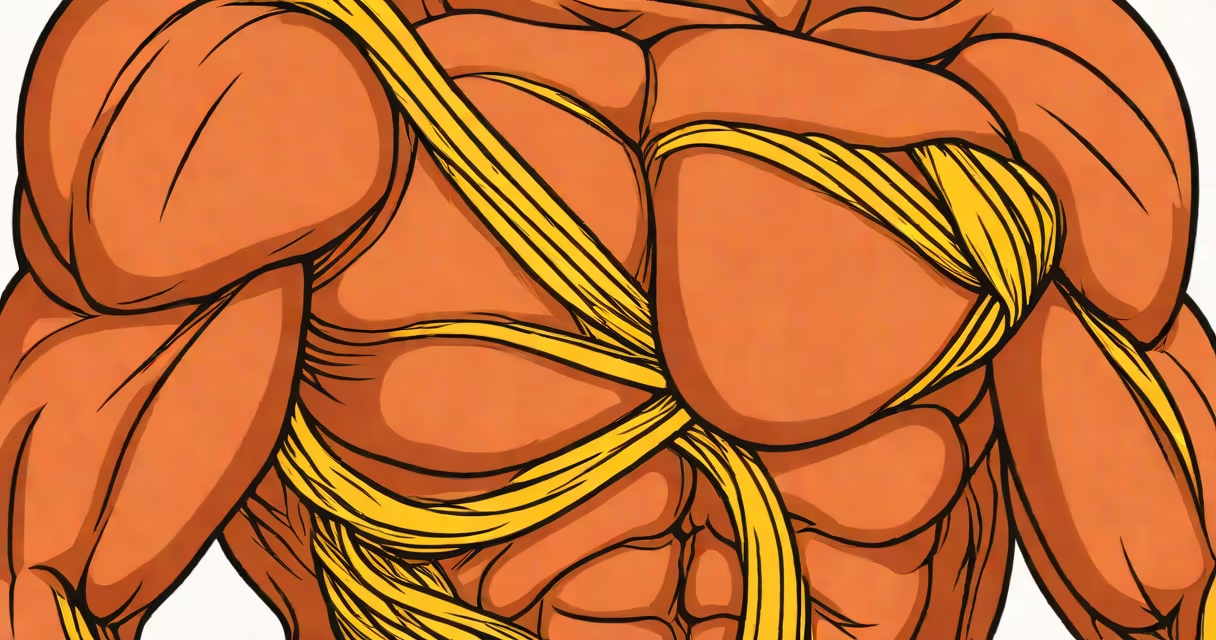
A muscle knot, or myofascial trigger point, typically lasts between a few days to several months without treatment. These tight, tender clusters of muscle fibers form due to overuse, injury, or stress.
Muscle knots develop when muscle fibers and connective tissue (fascia) become tight and tense. Common causes include:
When muscles are overworked or injured, they can't always relax properly. This causes the muscle fibers to bunch up and form a knot. The fascia around the muscle can also thicken and adhere to nearby tissues, creating a stubborn knot.
For example, sitting at a desk all day can cause muscle knots in the shoulders and neck due to prolonged static positioning. Similarly, intense workouts without proper warm-up or cool-down can lead to muscle knots in the legs and back.
Without intervention, muscle knots can persist for days, weeks, or even months. Mild knots from minor strain may resolve within a few days, while chronic knots from ongoing stress or repetitive motions can linger much longer.
For instance, a muscle knot in the lower back caused by heavy lifting might take a week to improve with rest and gentle stretching. However, a persistent knot in the trapezius muscle from chronic stress could last for months without targeted treatment.
Several methods can help relieve muscle knots and speed up recovery:
For example, using a foam roller on a tight calf muscle can help release a knot formed after a long run. Similarly, applying a heating pad to a stiff neck can help relax the muscles and reduce knot formation.
If a muscle knot persists for more than a few weeks despite home treatment, or if it causes severe pain or limits mobility, consult a healthcare provider. Chronic muscle knots may require physical therapy, chiropractic care, or other professional treatments.
For instance, if a muscle knot in the forearm doesn't improve with rest and stretching, a visit to a physical therapist can help identify underlying issues and provide targeted exercises for relief.