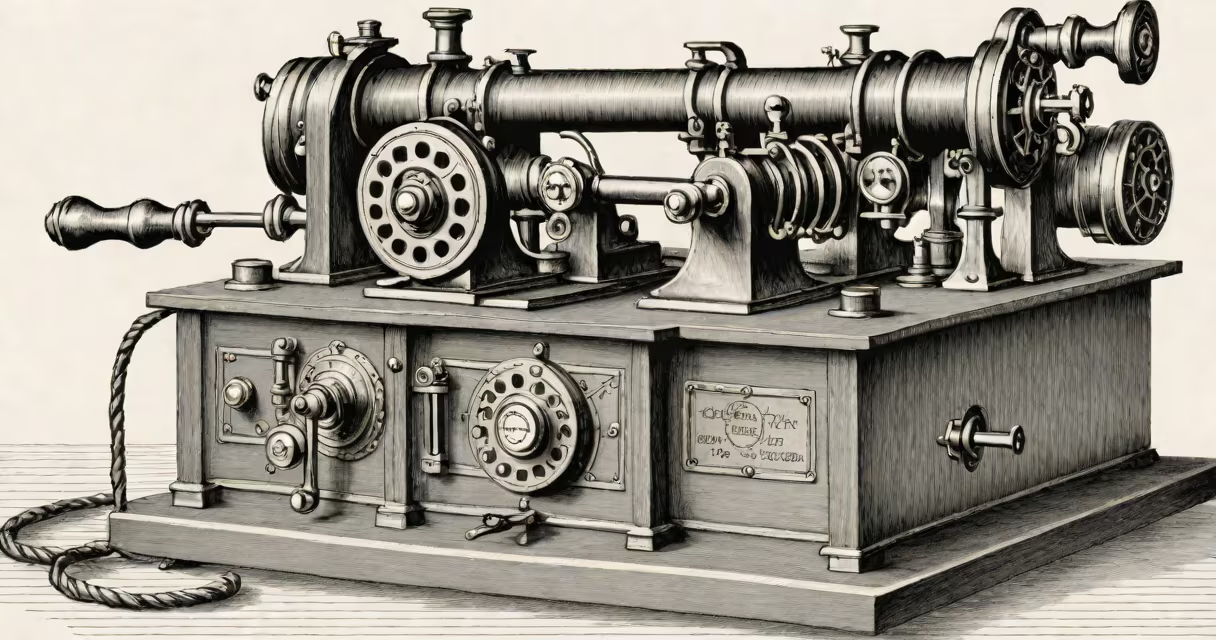
Morse code is a method of transmitting text as a series of on-off tones, lights, or clicks that represent letters, numbers, and punctuation. It works by converting characters into standardized sequences of short signals (dots) and longer signals (dashes), which can be sent electrically or visually.
The system was developed by Samuel Morse and Alfred Vail in the 1830s as part of the first electrical telegraph. It became the standard way to send messages over long distances before telephones replaced it in the early 20th century. Today, Morse code remains in limited use by amateur radio operators, aviators, and the military.
Each letter or number is represented by a unique combination of dots and dashes. A dot is a short signal, while a dash is three times longer. The length of a pause between parts of the same letter is equal to the length of a dot, and the space between letters is equal to three dots.
For example, the letter "S" is represented by three dots (· · ·), while "O" is three dashes (- - -). The word "SO" would be sent as · · · - - - - - with a seven-dot pause between letters. Numbers and punctuation also have their own codes. The numeral "1" is a single dot (·), while a comma is two dashes and a dot (- - · ·).
There are several versions of Morse code, each with slight variations in character representations. The most common types include:
Morse code was originally used for telegraph communication, where electrical pulses were sent along wires to transmit messages. Operators would tap messages using a Morse key, which would interrupt an electrical current to create dots and dashes. The receiving operator would then translate the tones back into text.
Today, Morse code is still used in aviation, where it's part of the standard call signs for airports and aircraft. For example, the call sign for Los Angeles International Airport is "KLAX," transmitted as - · - · · - · · · · · - - · -. It's also used by amateur radio operators and in emergency signaling, as it requires minimal equipment and can be sent over great distances.
One common misconception is that Morse code is a form of binary code. While both use a series of two distinct elements (dots and dashes, or ones and zeros), Morse code is an encoding system for text, whereas binary code is a base for all digital information.
Another mistake is assuming that Morse code is outdated and no longer relevant. While it's no longer the primary method of long-distance communication, it's still taught to pilots, military personnel, and amateur radio enthusiasts as a backup communication method.
I first encountered Morse code in a Boy Scouts merit badge class. We practiced sending and receiving messages using flashlight beams at night. It was surprisingly challenging to keep the timing consistent, especially under pressure. The experience gave me a new appreciation for the skill of early telegraph operators, who could transmit messages accurately at high speeds.
Let's encode the phrase "HELP ME" using International Morse Code:
The full transmission would be:
· · · · · - - · · · · · - - · · · - - - · - - · - -
Notice the spaces between letters (three dots' worth of silence) and the longer pause between words (seven dots' worth of silence).
Learning Morse code involves memorizing the dot and dash sequences for each letter, number, and punctuation mark. Many resources are available online, including charts, apps, and practice tools. Some people find it helpful to associate each letter with a word that starts with that letter and has the same number of syllables as dots and dashes. For example, "T" (-) could be associated with "tree," which has one syllable.
Regular practice is essential for mastering Morse code. Start with simple words and gradually increase the complexity of the messages you send and receive. Listening to recorded Morse code transmissions can also improve your ability to recognize and interpret the signals quickly.
While Morse code may seem like a relic of the past, its simplicity and reliability make it a valuable tool in specific contexts. Understanding how it works provides insight into the history of communication and the ingenuity of those who developed it.