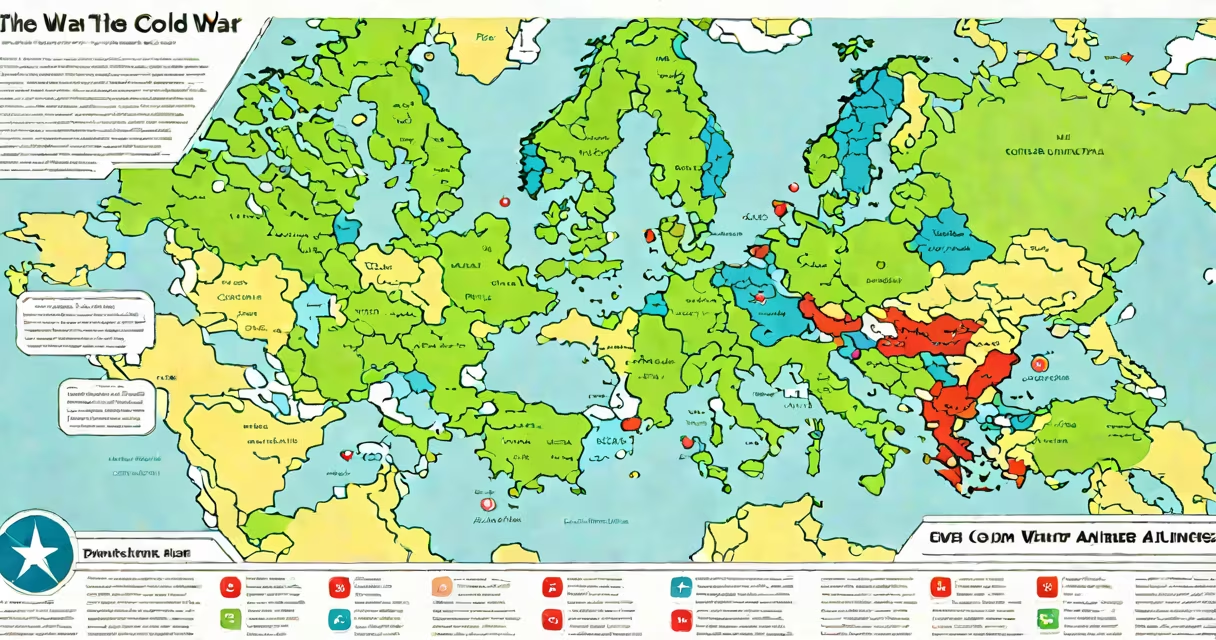
The Cold War lasted 46 years,. This period of geopolitical tension between the United States and the Soviet Union reshaped global power structures after World War II.
The Cold War began in 1947, marked by President Harry Truman's Truman Doctrine, which committed the U.S. to containing Soviet expansion. The conflict ended in 1991 with the dissolution of the Soviet Union, following decades of proxy wars, arms races, and ideological battles.
| Phase | Years | Key Events |
|---|---|---|
| Early Cold War | 1947-1953 | Truman Doctrine, Marshall Plan, Berlin Blockade, Korean War |
| Arms Race & Space Race | 1953-1962 | Sputnik launch, Cuban Missile Crisis, Berlin Wall construction |
| Détente | 1962-1979 | Nuclear Test Ban Treaty, Apollo-Soyuz mission, Helsinki Accords |
| Second Cold War | 1979-1991 | Afghanistan invasion, Reagan Doctrine, Fall of Berlin Wall, USSR collapse |
Some mistakenly believe the Cold War began with World War II's end in 1945. However, historians agree it started in 1947 when ideological tensions solidified. Others confuse its duration with shorter conflicts like the Cuban Missile Crisis (13 days) or proxy wars such as Vietnam (1955-1975).
The Cold War's 46-year span influenced modern geopolitics, creating alliances like NATO and shaping nuclear policies still in effect today. Its end left the U.S. as the sole superpower, altering global dynamics. Understanding its duration helps contextualize current international relations.