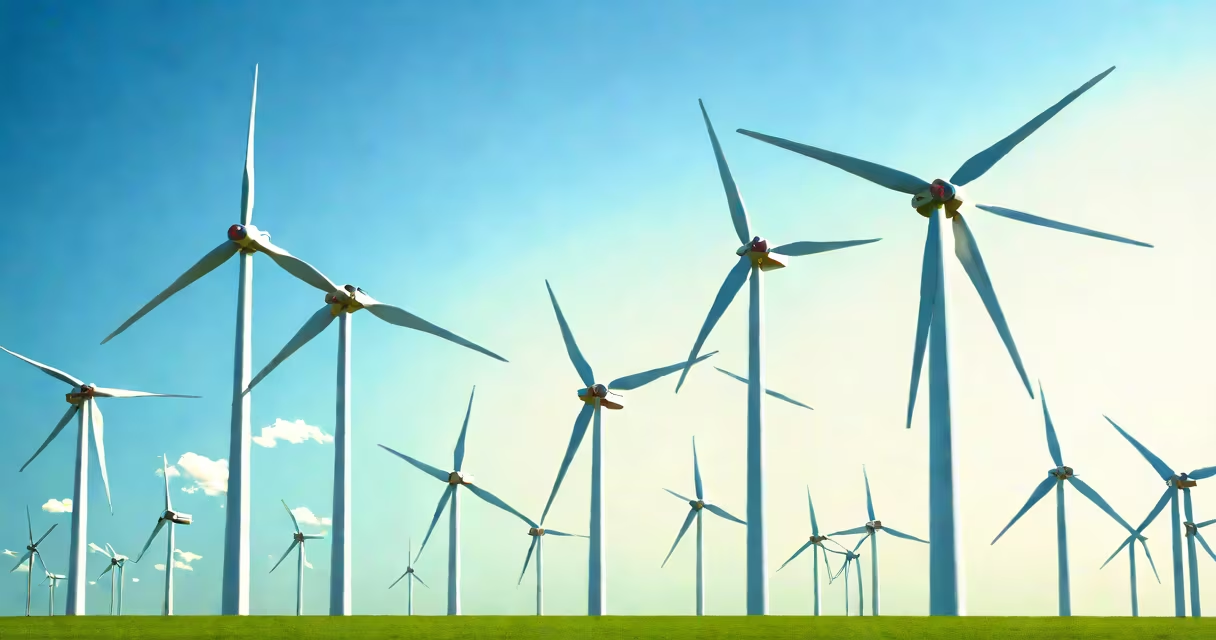
Wind power is renewable because it relies on the natural, inexhaustible movement of air caused by uneven heating of Earth's surface, which generates electricity without depleting finite resources. Unlike fossil fuels, wind energy doesn't produce greenhouse gases or pollutants during operation.
The sun heats different parts of Earth's surface at varying rates, creating temperature differences that cause air to move. This movement, or wind, turns the blades of wind turbines, which spin a generator to produce electricity. The process doesn't consume or deplete the wind itself, making it a sustainable resource.
There are two primary types of wind turbines:
Most large-scale wind farms use horizontal-axis turbines due to their efficiency and scalability.
Wind farms are located in areas with consistent, high wind speeds, such as coastal regions, plains, and hilltops. For example, the Gansu Wind Farm in China is one of the largest in the world, generating over 6,000 megawatts of power. Wind energy is used because it's clean, cost-effective, and reduces dependence on finite fossil fuels.
Some people confuse wind power with other renewable sources like solar or hydroelectric energy. While all three are clean, wind power uniquely harnesses the kinetic energy of moving air, whereas solar uses sunlight and hydro relies on flowing water. Another misconception is that wind turbines are noisy and harmful to wildlife, but modern turbines are designed to minimize noise and environmental impact.
I've visited a wind farm in Texas, where the turbines towered over the field, silently generating power. The sheer scale of these structures and their ability to convert wind into electricity was impressive.
Unlike fossil fuels, wind energy doesn't release carbon dioxide or other pollutants into the atmosphere. According to the U.S. Department of Energy, wind power avoids over 300 million metric tons of CO2 emissions annually in the U.S. alone., wind turbines have a lifespan of about 20-25 years, and their materials can often be recycled or repurposed.
Wind turbines generate electricity that powers homes, schools, businesses, and even entire cities. A single turbine can power approximately 1,500 average U.S. homes per year. Large wind farms, such as those in Iowa and Texas, contribute to the grid, reducing reliance on coal and natural gas plants.
Wind energy is a critical part of the renewable energy mix, offering a clean, efficient, and sustainable way to meet global electricity demands.