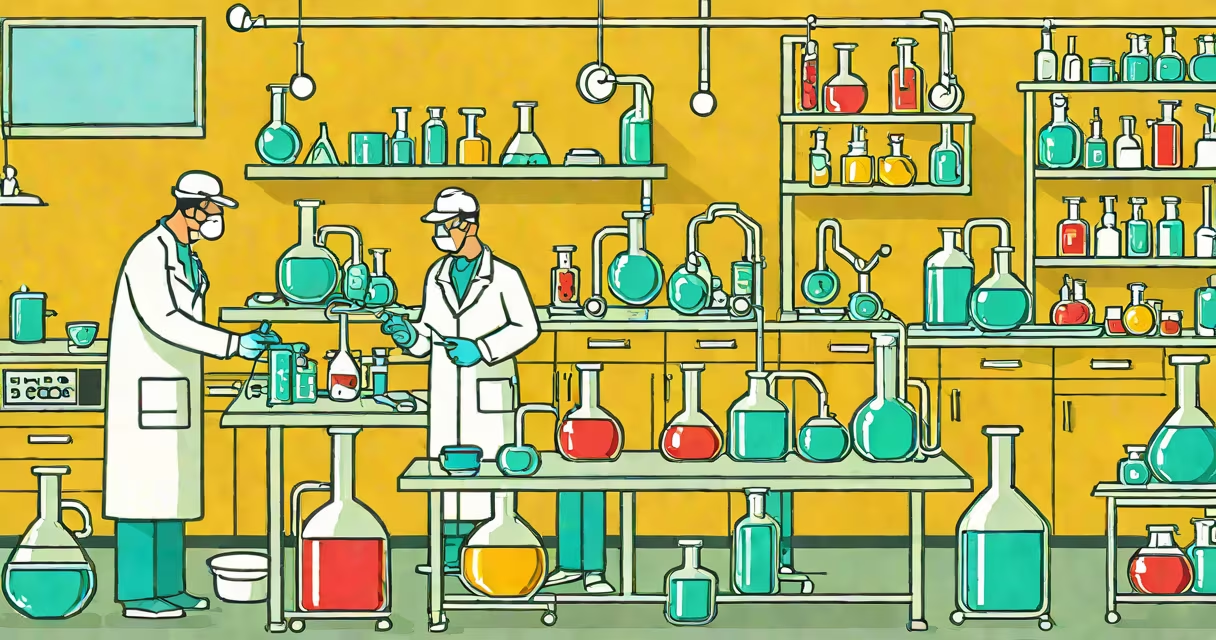
Chemistry lab techniques are standardized methods used to perform experiments safely and accurately. These procedures include measuring, mixing, heating, and analyzing substances while minimizing risks.
The most frequently used techniques in chemistry labs fall into four categories: separation, measurement, synthesis, and analysis. Here's how they work:
Filtration separates solids from liquids using a porous barrier, such as filter paper. When I worked in a lab, we filtered a mixture of sand and water. The liquid passed through the filter, leaving the sand behind. This technique is important for purifying solutions and preparing samples for further analysis.
Titration measures the concentration of a known reactant in a solution. A buret dispenses a titrant (a solution of known concentration) into a titration flask containing the analyte (the solution being analyzed). The endpoint occurs when the reaction reaches completion, indicated by a color change in the indicator.
To determine the concentration of hydrochloric acid (HCl), a chemist adds sodium hydroxide (NaOH) solution dropwise until the indicator changes color. The volume of NaOH used calculates the HCl concentration.
Lab safety prevents accidents and ensures accurate results. Always wear personal protective equipment (PPE), including gloves, goggles, and lab coats. Handle chemicals with care, and dispose of waste properly. According to the American Chemical Society, proper ventilation and emergency preparedness are critical for safe lab operations.
Many lab accidents result from improper technique or negligence. For example, heating a closed container can cause it to explode due to pressure buildup. Always use appropriate equipment and follow established procedures to avoid such hazards.
Understanding and mastering these techniques ensures accurate results and safe practices in any laboratory setting.