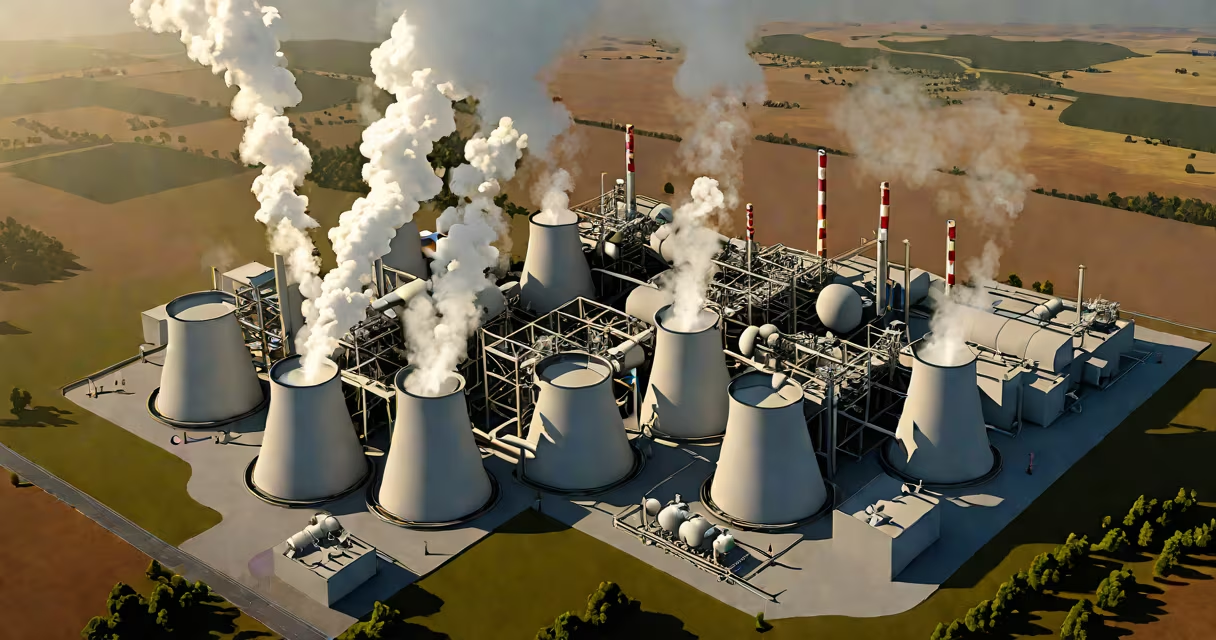
Geothermal energy harnesses the Earth's internal heat to generate electricity or provide heating. This process involves accessing heat stored beneath the Earth's surface, typically as steam or hot water, and using it to drive turbines connected to generators.
The Earth's core maintains temperatures between 4,000°F and 7,000°F (2,200°C and 3,900°C). This heat radiates outward, warming underground reservoirs of water and rock. When these reservoirs are tapped, the resulting steam or hot water can be brought to the surface to produce energy.
There are three primary types of geothermal power plants, each using different methods to convert geothermal energy into electricity:
| Type | Description | Example |
|---|---|---|
| Dry Steam | Uses steam directly from geothermal reservoirs to turn turbines. | The Geysers in California, the largest geothermal field in the world. |
| Flash Steam | Pumps high-pressure hot water into cooler, low-pressure tanks where it flashes into steam. | Nesjavellir Power Plant in Iceland. |
| Binary Cycle | Uses a secondary fluid with a lower boiling point than water to transfer heat. | Chena Hot Springs in Alaska. |
Creating geothermal energy involves several key steps:
Many people confuse geothermal energy with other forms of renewable energy. Unlike solar or wind energy, which depend on weather conditions, geothermal energy provides a consistent and reliable power source., geothermal energy is not limited to specific regions; it can be harnessed almost anywhere with the right geological conditions.
Another misconception is that geothermal energy is always environmentally friendly. While it produces fewer greenhouse gas emissions than fossil fuels, some geothermal plants release small amounts of gases like hydrogen sulfide. However, modern technologies have reduced these emissions.
Iceland is a leader in geothermal energy production, generating about 25% of its electricity and 90% of its home heating from geothermal sources. The country's unique geology, with numerous volcanoes and geothermal hotspots, makes it an ideal location for harnessing this renewable energy resource.