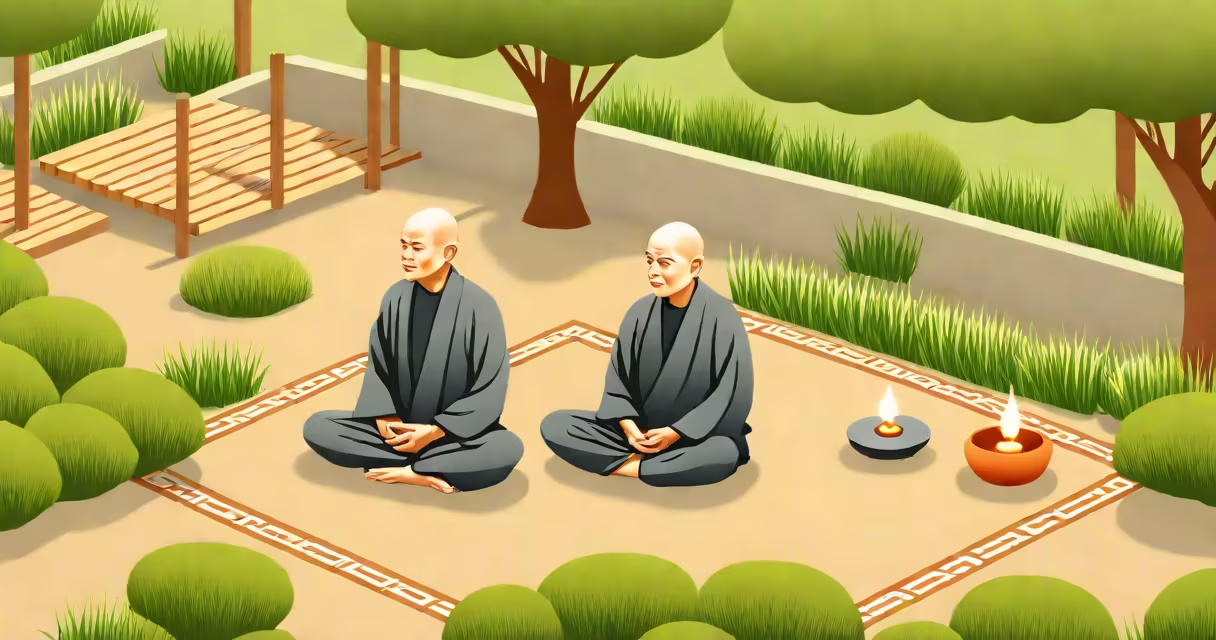
Thich Nhat Hanh's methods for focusing combine mindful breathing, walking, and awareness to cultivate presence and calm. These practices stem from his interpretation of Buddhist mindfulness, emphasizing simplicity and practicality for daily life.
The most common technique is conscious breathing, where you inhale and exhale while silently counting or reciting phrases like "I breathe in" and "I breathe out." This creates a meditative loop that anchors attention to the present moment. Another key practice is mindful walking, where you focus on each step and the sensations of movement.
Thich Nhat Hanh also teaches "beginner's mind," the idea of approaching each moment with fresh curiosity, free from preconceptions. This concept is central to his approach, as it helps prevent distractions by fostering genuine engagement with the present.
| Practice | Description | Key Benefit |
|---|---|---|
| Conscious Breathing | Focusing on inhaling and exhaling while silently repeating phrases | Calms the mind and reduces stress |
| Mindful Walking | Paying attention to each step and bodily sensations | Grounds you in the present moment |
| Beginner's Mind | Approaching each moment with fresh curiosity | Prevents distractions by fostering engagement |
These practices are used in daily life to manage stress, improve concentration, and cultivate inner peace. They are particularly useful in high-stress environments like workplaces or during moments of anxiety. Thich Nhat Hanh designed them to be accessible, requiring no special equipment or setting.
A common misconception is that these techniques require long periods of seated meditation. In reality, they can be practiced in short bursts throughout the day, such as during a five-minute break or while waiting in line. The key is consistency rather than duration.
One mistake people make is expecting immediate results. Like any skill, focusing takes practice. Another error is rigidly adhering to a single technique, ignoring the flexibility Thich Nhat Hanh emphasizes. His methods are meant to adapt to individual needs and circumstances.
For example, if conscious breathing feels difficult at first, mindful walking might be a better starting point. The goal is progress, not perfection. As Thich Nhat Hanh often said, "The miracle is not to walk on water. The miracle is to walk on Earth in the present moment."
I first tried Thich Nhat Hanh's techniques during a stressful work project. Sitting at my desk, I took three mindful breaths, focusing on the sensation of air entering and leaving my lungs. Within minutes, my racing thoughts slowed, and I felt more centered. This small practice made a noticeable difference in my ability to concentrate and complete the task at hand.