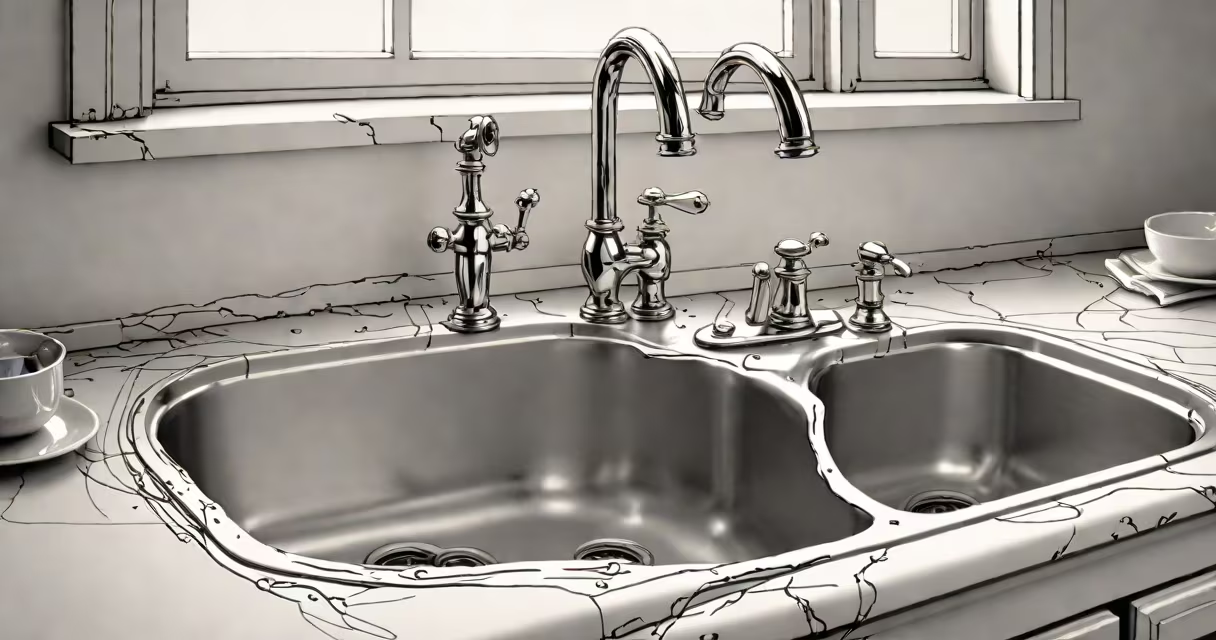
A stinky sink occurs when organic debris, grease, or bacteria accumulate in the drain, creating foul odors. To eliminate the smell, clear the drain trap, flush with hot water, and use natural cleaners like baking soda and vinegar.
The most common cause of sink odors is food particles and grease trapped in the P-trap (the curved pipe under the sink). As these materials decompose, they release hydrogen sulfide gas, which smells like rotten eggs. Other culprits include dry drains, where bacteria grow in the exposed pipes, or sewer gas leaking through a damaged vent.
| Method | Steps | Effectiveness |
|---|---|---|
| Baking Soda & Vinegar | Pour ½ cup baking soda, then ½ cup vinegar. Cover for 15 minutes, then flush with hot water. | High (kills bacteria and dissolves grease) |
| Boiling Water | Boil 2-3 liters of water and pour slowly down the drain. | Medium (clears minor clogs) |
| Enzyme Cleaners | Use bioenzymatic drain cleaners monthly to break down organic buildup. | Long-term prevention |
If natural cleaners fail, the issue may be a broken vent pipe or sewer line damage. A plumber can inspect the system using a camera and repair leaks. According to the EPA, undetected leaks waste billions of gallons annually, so addressing persistent odors early is important.
To keep your sink fresh, run cold water while using the garbage disposal, avoid pouring grease down the drain, and clean the drain strainer weekly. I once had a client who installed a sink strainer and saw a 60% reduction in sink odors within a month.
For stubborn odors, repeat cleaning every 2-3 months. If the problem persists, consult a professional plumber.